
Views: 0 Author: Site Editor Publish Time: 2026-05-19 Origin: Site


Many assume clearing winter roads simply requires pushing snow out of the way. This dangerous oversimplification causes massive equipment failure. Commercial snow removal evolved far past the horse-drawn street plows of 1862 Milwaukee. Today, it operates as a high-stress mechanical science. You need precise vehicle payload matching, strict structural integrity, and tactical execution. A truck acts as a dynamic power plant driving a complex hydraulic attachment.
If municipalities or facility managers miscalculate this operation, they face severe liability risks. Pairing the wrong heavy-duty snow plow with an inadequate chassis destroys transmissions quickly. Misjudging surface temperatures turns parking lots into frictionless ice sheets. The margins for error remain incredibly tight.
This technical guide evaluates how commercial snow clearing actually functions. We break down blade metallurgy, hydraulic architecture, vehicle weight compliance, and modern automation. You will learn the exact operational techniques required to protect your vehicle fleet while maximizing your overall equipment lifespan.
Mechanics Over Brute Force: Modern plows rely on advanced hydraulic systems, a trip-edge safety mechanism, and precision-engineered components to cut and shatter compacted ice without destroying the vehicle's chassis.
Vehicle Compliance is Mandatory: Mounting a plow requires strict adherence to a vehicle's Front Gross Axle Weight Rating (FGAWR); overloading front axles leads to catastrophic suspension failure.
Material Dictates Application: The choice between carbon steel, polycarbonate, rubber, and tungsten carbide dictates friction limits, weight, and surface protection capabilities.
Plowing is Weather & Speed-Dependent: Most operations occur under 30 MPH to prevent shock damage. Furthermore, plowing without salt when temperatures drop below 20°F (-6.6°C) can physically polish the road, creating highly dangerous "glare ice."
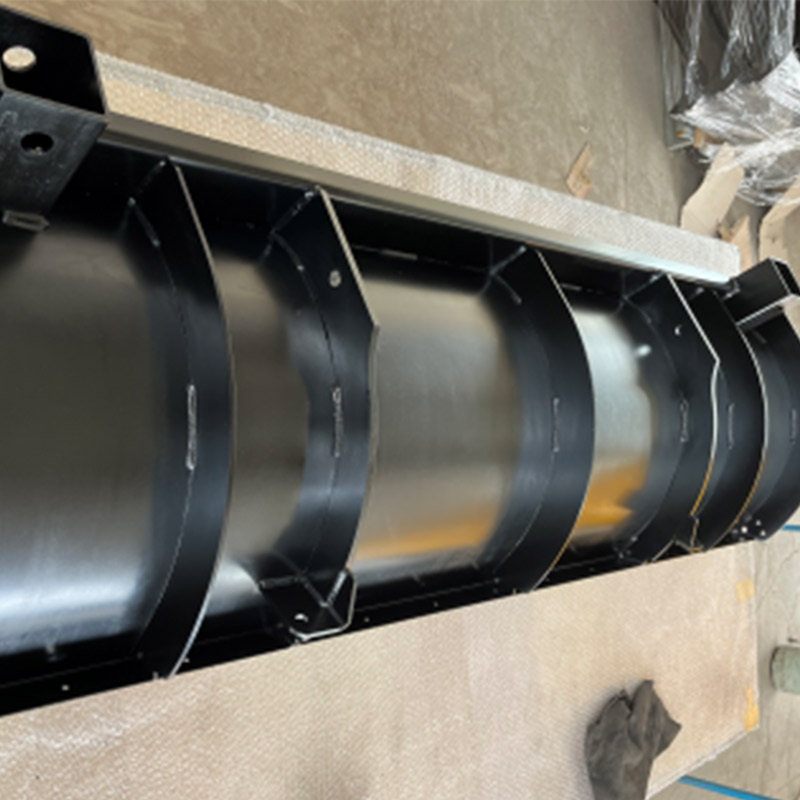
A blade operates on principles of fluid dynamics rather than sheer blunt force. Engineers specifically design the curved moldboard to roll and curl snow continuously off to the side. This continuous rolling action limits aerodynamic and physical drag, allowing the vehicle to maintain momentum. If a blade acted like a flat bulldozer shovel, snow would accumulate rapidly. The resulting rigid wall of snow would stall the truck engine entirely. Furthermore, the bottom cutting edge physically shatters and separates compacted ice from the pavement. The truck provides the forward kinetic energy, but the blade's geometry ultimately dictates snow displacement efficiency.
Modern plows rely on robust, high-pressure hydraulic systems. Heavy-duty hydraulic pumps and electric manifold valves provide immense lifting torque. This configuration allows the operator to lift, lower, and angle a massive steel blade instantly under severe pushing loads. We evaluate these systems by their cylinder types. Single-acting cylinders rely on gravity to drop the blade, while double-acting cylinders provide active downward pressure to scrape thick ice.
These hydraulic systems draw significant amperage from the vehicle's electrical system, often exceeding 200 amps during a lift cycle. Upgraded 250-amp alternators and dual battery setups are strictly mandatory to keep these pumps running. Without them, the pump will drain the truck's electrical reserves and trigger an engine stall mid-storm.
Clearing compacted ice sends massive kinetic shockwaves through the equipment. The physical survival of the entire apparatus depends entirely on high-quality Welded Parts. The A-frame and quadrant form the structural backbone of the attachment, connecting the vehicle frame to the moldboard. Manufacturers heavily utilize automated Welding processes to ensure perfect, uniform weld penetration along every joint. Heavy steel gussets reinforce high-stress pivot points. This precision fabrication directly prevents metal fatigue and stops hairline fractures from forming when the blade repeatedly slams into hard-packed ice ridges at driving speeds.
Attaching a plow requires highly invasive vehicle modifications. Commercial installation necessitates permanent fasteners bolted directly into the truck frame rails. Installers must weld custom steel mounting brackets to the chassis to distribute the extreme pushing force safely across the vehicle body. In many modern trucks, this requires the permanent or seasonal removal of the factory front air dam and bumper. You cannot simply strap a blade to front tow hooks. The mounting hardware must become a rigid, permanent structural extension of the vehicle frame to handle the sheer force of moving wet snow.
The snow removal industry is rapidly shifting from purely analog operations to semi-autonomous control systems. Historically, operators relied on raw physical feedback and visual markers to adjust their blades. Today, modern commercial plows utilize GPS technology to map out challenging commercial lots before the snow even falls. Obstacle detection sensors alert drivers to hidden curbs and frozen storm drains. Advanced camera arrays completely eliminate forward and lateral blind spots, allowing the onboard computer network to suggest dynamic blade angle adjustments for optimal clearing efficiency.
Choosing the correct blade shape requires a strict mathematical calculation based on terrain volume, spatial constraints, and vehicle capacity. Every design serves a highly specific commercial purpose.
Straight Blade: This remains the standard for residential driveways and basic, low-volume commercial clearing. It is cost-effective, features fewer moving parts, and adds less weight to the truck chassis. However, it struggles heavily against deep, hard-packed snow drifts, forcing the operator to make multiple inefficient passes.
V-Shaped Plows: Engineers design these units to slice cleanly through deep snow with minimal physical drag. The V-shape parts the snow down the middle, drastically reducing forward resistance and preventing truck stalls. This multi-hinge design requires incredibly robust pivot-point welded assemblies to withstand the outward sheer force generated by deep drifts.
Scoop/Box-Style: This design completely prioritizes containment over deflection. Box plows lack angling capabilities and are strictly used for clearing massive, high-volume commercial parking lots. Operators use them to capture vast quantities of snow in a single pass and physically drag it to a designated melting zone.
The bottom edge of the blade contacts the ground directly. Selecting the correct material for this specific edge prevents costly property damage and extends equipment life across thousands of working hours.
| Material Type | Key Physical Properties | Primary Application Environment |
Polycarbonate | Ultra-slick thermoplastic polymer. Highly corrosion-resistant and lightweight. | Prevents wet, heavy snow from sticking to the blade surface. Excellent for coastal winter climates with high moisture content. |
Rubber / Polyurethane | Maximum flexibility. Extremely low ground abrasion and vibration transfer. | Strictly mandatory for delicate surfaces like decorative brick, stamped concrete, and loose gravel roads. |
Carbon Steel | Industry standard durability. Heavy, highly rigid, and prone to sparking. | General municipal work, highway clearing operations, and standard asphalt commercial parking lots. |
Tungsten Carbide | Unparalleled lifespan and hardness. Easily slices highly dense ice formations. | Heavy-duty municipal applications on flat asphalt. Cannot be used on sensitive or uneven surfaces due to a complete lack of structural flex. |
Vehicle compliance requires strict operational mathematics. Every truck carries a Front Gross Axle Weight Rating (FGAWR) and a Gross Vehicle Weight Rating (GVWR) printed directly on the driver's side door jamb sticker. Operators must carefully calculate the exact combined weight of the plow, the steel mounting bracket, and the onboard hydraulic fluid. Adding 800 to 1,200 pounds of steel directly ahead of the front bumper creates a massive physical fulcrum effect. Overloading the front axle leads to catastrophic suspension collapse, blows out front tire sidewalls, invalidates commercial vehicle insurance, and creates highly dangerous highway handling characteristics.
Adding concentrated weight to the extreme front of a truck inevitably lifts the rear end, ruining rear tire contact patches and steering geometry. To restore steering control and vehicle balance, operators must add heavy rear ballast secured tightly behind the rear axle. Heavy-duty plowing strictly requires mechanical All-Wheel Drive (AWD) or robust 4WD configurations with locking differentials. Pushing thousands of pounds of wet snow breaks standard two-wheel-drive traction instantly. Modern electronic traction control systems must work in tandem with the mechanical 4WD to keep the truck moving forward under a severe load.
Mismatched equipment destroys trucks rapidly. Fleet managers must follow these strict industry sizing limits to prevent catastrophic drivetrain failure:
| Truck Weight Class | Typical FGAWR Limit | Safe Equipment Parameters |
1/2 Ton (Class 1) | 3,000 - 3,500 lbs | Strictly limited to lightweight 6-foot or 7-foot straight blades. Maximum attachment weight under 450 lbs. |
3/4 Ton (Class 2) | 4,500 - 5,500 lbs | Capable of handling standard 8-foot straight blades or entry-level V-plows. Ballast required. |
1 Ton & Up (Class 3+) | 5,500 - 7,000+ lbs | Required for heavy-duty 9-foot to 10-foot commercial V-blades and wide box plows. |
A raised blade completely obstructs the vehicle's factory headlights and turn signals. Driving blindly with obstructed lights is a serious safety hazard and highly illegal under Department of Transportation (DOT) regulations. To correct this, commercial setups necessitate the installation of dedicated, DOT-compliant lighting systems. Technicians mount these specialized high-output LED fixtures directly at the top of the A-frame bracket to project light clearly over the raised moldboard.
Mechanical clearing and chemical de-icing must work together in a coordinated synergy. Standard rock salt (Sodium Chloride) physically stops melting ice when surface temperatures drop below 20°F (-6.6°C). Dry-plowing under these specific cold conditions is incredibly dangerous. Scraping cold snow without an active chemical melting agent physically polishes the remaining compacted snow into a deadly, frictionless surface known as "glare ice." To counter this, operators run rear spreaders simultaneously with the blade. They apply treated sand for traction or specialized liquid de-icers (like Calcium Chloride, effective down to -20°F) to manage the thin residual layer left behind.
Momentum is your primary tool, but raw speed is your enemy. Operators must never make sudden stops or execute sharp steering adjustments while pushing heavy snow. Abrupt directional changes instantly break the vehicle's physical traction footprint. Once tires break loose under a heavy load, dangerous slides occur immediately, even with mechanical AWD fully engaged. Smooth, deliberate steering inputs maintain the tire tread's physical grip on slick surfaces.
Commercial operators use highly specific tactical approaches based on measured snowfall totals to protect the vehicle's drivetrain.
Layering Strategy (Depth Management): Engine load management is paramount. For fresh snow under 2 inches deep, operators use the full blade width. For snow ranging from 3 to 5 inches, they use only 3/4 of the blade width. When snow exceeds 6 inches, operators strictly use 1/2 blade width per pass. This fractional approach prevents the truck's engine, transmission, and electrical system from stalling under extreme physical resistance.
Windrowing Tactics: This technique angles the blade heavily to one specific side. As the truck drives forward, it creates continuous, rolling ridges of snow along the outer curb line. The operator lifts the blade slightly at the end of the run to stack the snow vertically and reduce electrical strain on the hydraulic pump.
Back-dragging clears tight spatial zones, like areas directly in front of commercial loading docks and garage doors. The driver pulls up to the door, drops the blade flat against the asphalt, and reverses to drag the snow outward into the open lot. Mechanically, automotive reverse gears are not engineered for heavy pulling or dragging under extreme load. You must never back-drag more than two to three truck lengths at a single time. Exceeding this spatial limit causes extreme internal heat buildup and leads to premature, catastrophic transmission planetary gear failure.
Municipalities heavily regulate snow removal operations. Pushing snow across public roadways to dump it on the opposite side is strictly illegal in nearly all North American jurisdictions. Furthermore, facility managers must map out meltwater drainage routes before the plowing sequence begins. Piling snow uphill from a pedestrian walkway guarantees that daytime meltwater will flow across the pavement and refreeze overnight. This negligence directly causes slip-and-fall injuries and subsequent multimillion-dollar liability lawsuits.
Commercial parking lots hide dangerous concrete curbs, frozen storm drains, and raised cast-iron manhole covers beneath the snowpack. Striking a fixed steel object at 20 MPH transfers lethal kinetic energy directly into the truck frame, instantly bending chassis rails. The trip-edge mechanism acts as a mechanical lifesaver. When the hidden cutting edge strikes an immovable object under 6 inches high, massive heavy-duty tension springs allow the edge to fold backward instantly. This immediate physical absorption allows the assembly to skip over the obstacle, actively saving the truck chassis from bending.
Clearing loose gravel roads or unpaved rural driveways requires extreme caution to avoid destroying the road surface itself. Operators utilize heavy adjustable skid shoes mounted directly behind the main blade. These thick steel discs elevate the cutting edge slightly above the loose gravel. By intentionally floating the blade one inch above the ground, operators remove the top snow without excavating the costly aggregate road base underneath.
City highways require physical scale and diesel power far beyond the capability of any standard heavy-duty pickup truck. Municipal fleet managers rely on massive, specialized heavy equipment variants to clear interstates.
Underbody Scrapers and Wing Plows: Large municipal dump trucks use highly rigid Metal components mounted directly under the truck chassis to violently scrape away stubborn bottom-layer ice. Simultaneously, side-mounted wing plows deploy outward on hydraulic arms, actively multiplying the single-pass clearing width by up to 10 feet.
Tow Plows and Rotary Plows: Extreme weather dictates extreme equipment solutions. Tow plows are massive trailer-mounted units pulled behind municipal trucks. They swing outward hydraulically to clear up to 26 additional feet in a single pass. Rotary plows function as massive industrial snowblowers, essential for high-altitude regions like the Sierra Nevadas that routinely experience over 500 inches of annual snowfall.
Highway clearing operations often involve a strict, staggered, multi-truck formation known as Echelon plowing. Three or four massive trucks align diagonally across all highway lanes, passing snow sequentially from the left lane all the way to the right shoulder. Civilian drivers make a lethal mistake when attempting to weave through or pass this formation. Wing plows create massive lateral blind spots for the truck driver. Furthermore, the massive displacement kicks up blinding snow clouds that drop visibility to absolute zero in seconds. Civilians must maintain a strict 10-car-length following distance to avoid being struck by flying de-icing salt, wet sand, and heavy ice debris ejected backward from the commercial rear spreaders.
Road salt and liquid magnesium chloride are highly corrosive to all exposed steel, aluminum, and electrical wiring. Neglecting basic equipment hygiene destroys expensive attachments in a single winter season. Operators face a strict requirement for immediate post-storm washing. Every hydraulic fitting, electrical harness connection, and structural crevice must be thoroughly flushed with high-pressure fresh water. Routine grease lubrication of all pivot points and moving pins prevents rust oxidation from locking the mechanical hinge assemblies tight.
Equipment breakdowns mid-storm are intensely costly and physically dangerous. Fleet managers must establish a rigorous, scheduled maintenance protocol. Mechanics regularly check hydraulic fluid integrity and cold-weather viscosity ratings to prevent frozen lines. They must physically measure cutting edge degradation to replace blades before they wear down to the actual expensive steel moldboard. Technicians must thoroughly inspect the complex Precision-engineered components and structurally test all joints for hairline stress fractures before the next major freeze.
A Snow Plow is never just a simple metal shovel. It functions as a highly complex hydraulic and mechanical attachment that completely alters a vehicle's driving dynamics, electrical draw, and structural load limits. Operating one successfully demands mechanical sympathy, an understanding of applied physical mathematics, and deep respect for harsh winter weather realities.
When selecting your commercial equipment, always work backward from your specific operational needs. Identify your target surface type to determine the correct blade material. Measure your average lot volume to correctly choose between Straight, V, or Box styles. Finally, you must strictly adhere to your truck's front axle weight limits to ensure safe, legal highway operation.
Take the following actionable steps before the next winter season begins:
Consult a certified commercial upfitter to perform a precise payload and FGAWR calculation on your specific truck chassis.
Review the exact specifications of your replacement metal components and cutting edges to match your local asphalt or gravel terrain safely.
Establish a mandatory post-storm vehicle wash and pivot-point lubrication checklist for your drivers to actively prevent corrosive salt damage.
Map out all parking lot obstacles, storm drains, and designated meltwater runoff zones before the first snowfall covers them.
A: If improperly matched to the surface or operated recklessly, they certainly can cause damage. Using a rigid tungsten carbide edge on uneven brick easily tears up the pavement surface. Lacking adjustable plow shoes on gravel roads will excavate the expensive stone base. Using flexible rubber or polyurethane edges mitigates this risk entirely.
A: Operators keep speeds under 30 MPH to prevent catastrophic shock damage if the blade hits a hidden obstacle. Slower speeds also maintain vehicle traction over slippery displaced snow. This controlled pace allows rear spreaders to distribute de-icing agents evenly across the newly cleared pavement.
A: A trip edge serves as a mechanical safety feature utilizing heavy tension springs. It allows the bottom edge or the entire blade assembly to pivot forward instantly upon striking an immovable object under 6 inches high. This absorption protects the truck chassis and the mount from severe kinetic impact damage.
A: Generally, you cannot. Half-ton trucks lack the necessary front-end suspension capacity and FGAWR for heavy-duty commercial V-plows or wide box blades. Overloading the front axle leads to immediate suspension failure and unsafe steering. These trucks remain strictly restricted to lightweight, 6-foot straight blades.
A: Operators intentionally leave a thin residual snow layer to avoid scraping the road surface too aggressively. This practice preserves the underlying asphalt and prevents edge wear. Drivers manage this final layer by simultaneously spreading salt or chemical sand from the rear, which chemically initiates the melting process.


