
Views: 0 Author: Site Editor Publish Time: 2026-06-19 Origin: Site


Safe procurement of rigging hardware starts with a simple rule: every load-bearing component must be specified, marked, tested, and inspected as rated forged hardware. For hooks, pins, and shackles, the real risk is not only overload. It is also counterfeit paperwork, missing markings, swapped pins, side-loading, shock loading, corrosion, and hardware sold as forged when it is only cast or unspecified steel. Procurement managers and safety engineers reduce that risk by checking four things before purchase and before use: forged alloy steel construction, permanent traceable markings, batch-specific test records, and correct application geometry. That same discipline matters for both lifting and securement. A component that is acceptable for transport restraint may be unsuitable for overhead lifting, even when it looks similar. The safest buying process relies on OSHA and ASME requirements, field inspection rules, and supplier evidence that matches the exact batch delivered.
Traceability Is Non-Negotiable: Legitimate steel forging parts should carry permanent WLL/SWL, manufacturer identification, and heat lot markings that can be matched to a batch-specific Mill Test Certificate (MTC).
No Marking, No Use: Unmarked or illegible shackles must be removed from service immediately. Hooks without manufacturer guidance require formal proof testing and certification records before first use.
Geometry Controls Real Capacity: Side-loading, point-loading, shock loading, and narrow sling angles can reduce safe capacity dramatically even when the hardware itself is compliant.
Discard Criteria Are Strict: Any 10% dimensional loss, visible bending, heat damage, thread damage, unauthorized welding, or severe corrosion is enough to remove a hook, shackle, or pin from service permanently.
Matched Components Matter: Standard commercial bolt substitutions, swapped shackle pins, or mixed-grade assemblies create hidden weak links that defeat the rated strength of heavy duty securing chains and lifting assemblies.
Testing Evidence Beats Marketing Claims: Reliable forging parts suppliers can show proof-load data, break-load data, fatigue-testing practices, and traceable material records—not just generic PDFs.
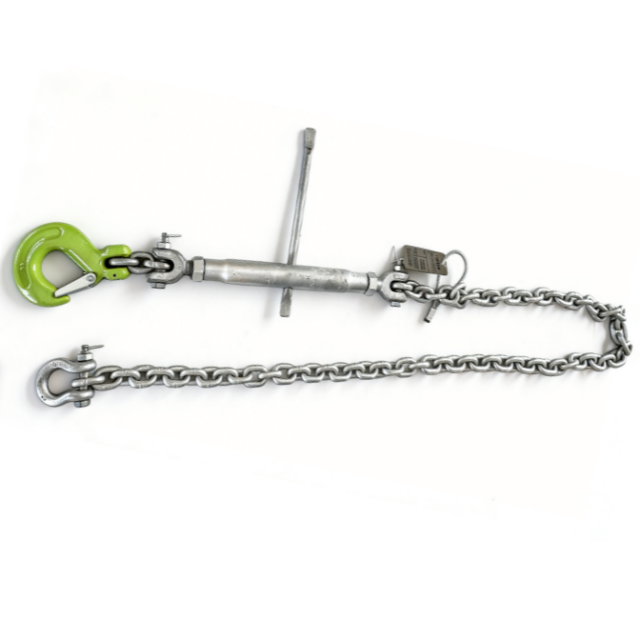
Heavy-duty rigging depends on predictable behavior under load. Forged alloy steel generally provides better grain flow, toughness, and resistance to crack propagation than cast metal. Cast components may contain internal voids, porosity, or inclusions that are difficult to detect during routine receiving checks. Under impact, bending, or cyclic loading, those defects can trigger brittle fracture with little warning.
That is why buyers sourcing forging parts should reject vague descriptions such as “steel hook,” “metal shackle,” or “industrial fitting” when no forging method, alloy grade, or heat-treatment condition is stated. For overhead lifting, transport restraint, and safety-critical connections, the specification should identify forged alloy steel, required markings, proof-load expectations, and the intended duty category.
For buyers comparing steel forging parts across suppliers, the key issue is not appearance. Two parts can look almost identical while having very different grain structure, hardness, and toughness. The part with complete traceability and test evidence should always win the evaluation.
Permanent markings are the first screening tool in the field. Rated hardware should carry legible WLL or SWL information, the manufacturer name or trademark, size, and a heat lot or batch identifier where applicable. Those markings link the delivered item to the Mill Test Certificate, inspection record, and packing documentation. Without that link, the user cannot verify that the part in service is the part that was tested.
This matters for both forging parts for lifting system applications and forging parts for securing system applications. Buyers often assume that a securement fitting and a lifting fitting can be interchanged because they share a similar shape. That assumption creates liability. The rating basis, design factor, and inspection criteria may be different.
Rated forged hardware should be backed by a defined test program. Buyers should expect clear statements on proof-load testing, destructive break testing, and the material grade used in production. Proof testing confirms that the component can withstand a controlled load above its working rating without permanent deformation. Break testing establishes the margin between working load and ultimate failure. When a supplier cannot explain how those tests relate to the published WLL, the product should not be approved for critical service.
Finish selection also deserves scrutiny. Galvanizing, painting, and powder coating can improve corrosion resistance, but they should never hide cracks, peening damage, thread loss, or missing markings. A protective finish is useful only when it supports visibility, traceability, and the real service environment.
ASME B30.10 requires permanent manufacturer identification and rated load markings on lifting hooks. OSHA 1915.113 adds an important control when manufacturer recommendations are unavailable: the hook must be proof tested to two times the intended safe working load before first use, and the employer must keep a signed, dated certification record. That record should identify the hook, the test date, and the person who performed the test.
Hooks sold for rigging should therefore arrive with more than a catalog page. A defensible procurement file includes the part number, material statement, WLL, heat lot information when provided, and evidence of proof testing or the manufacturer’s documented load basis. That is especially important when sourcing a sling Hook for repeated industrial lifting cycles.
Testing claims should be specific. Buyers should ask whether proof testing is performed on each part, by batch, or by sample. They should also confirm whether destructive testing is conducted on representative samples and whether fatigue testing is part of the supplier’s quality routine for repetitive loading applications. A supplier that only sends a generic PDF with no batch reference has not supplied meaningful proof.
Match the part number on the quotation to the part number on the certificate.
Check whether the heat lot or batch number appears on both the product record and shipping paperwork.
Confirm the stated proof load and test method.
Review who performed the test and whether calibration records exist for the equipment used.
Verify that the rating basis fits the intended service, not a different product family.
This review takes time, but it prevents a common failure mode in purchasing: accepting a certificate that belongs to another batch or another product size.
Hook ratings assume proper loading in the bowl or throat of the hook. Tip loading, side loading, and contact on a narrow edge concentrate stress and can reduce real capacity sharply. Even a compliant hook becomes unsafe when the load path changes. That is why lift plans should identify sling angle, connection orientation, and whether the hook will rotate during use.
Shock loading creates another hidden overload. A load that is started abruptly, snatched from slack, or stopped suddenly can exceed the rating even when the static weight seems acceptable. In service, any sign of twisting, spreading, springing, or permanent bending is cause for removal from service. Safety latches and self-locking mechanisms are also important. They do not increase WLL, but they reduce accidental disengagement during motion and slack conditions.
Grade selection affects weight, size, and reserve strength. The best choice depends on the full assembly, not only the hook itself.
| Grade | Relative strength | Typical use | Main caution |
80 | Baseline alloy lifting grade | General overhead lifting and chain slings | Do not assume it matches higher-grade assemblies |
100 | About 25% stronger than Grade 80 | Higher-capacity lifting with reduced weight | Requires compatible chain and connecting hardware |
120 | Higher than Grade 100 | Weight-sensitive heavy lifting programs | Needs strict system engineering and supplier support |
Slip hooks fit some towing and securement tasks. Grab hooks are used to shorten chain legs. Self-locking hooks are often preferred for overhead lifting where accidental release must be minimized. Grade mixing should be treated as a system engineering decision, not a field convenience.
Shackles used in rated service should display the manufacturer’s marked safe working load or working load limit, plus identification and size information. A missing or unreadable mark is not a cosmetic issue. It breaks the traceability chain and removes the basis for safe use. For that reason, an unlabeled or illegible shackle should be removed from service immediately.
Pin control is equally important. The body and pin are designed as a matched set. Swapping pins between brands, sizes, or product lines creates unknown shear strength, thread fit, and bearing surface conditions. Even when the replacement pin seems to fit, the assembly rating is no longer defensible.
D or chain shackles are intended for straight-line loading. Their narrow profile makes them unsuitable for side loading. Bow or anchor shackles provide more room for multiple sling eyes and better accommodate applications where some angularity exists. Even so, side loading still requires the manufacturer’s derating guidance. The wider shape does not permit casual use at any angle.
When the lift plan includes multi-leg slings, uneven pull, or narrow attachment lugs, the procurement team should disclose that geometry before ordering. The correct shackle type depends on how the load enters the body and pin, not merely on nominal capacity.
Screw pin shackles are useful for temporary connections and frequent rigging changes. They are fast to assemble, but they can loosen in service if vibration, cyclic loading, or rotation is present. Bolt-type shackles use a bolt, nut, and cotter arrangement that better resists unintentional disassembly. For long-term installations and repeated lifts, bolt-type selections usually provide better retention control.
That distinction should not be blurred with generic hardware. A rated shackle pin is not interchangeable with a hardware-store fastener. The product page for bolt fittings may show dimensional similarity, but rigging approval depends on matched design, material, and traceability.
For screw pin shackles, a common field practice is to tighten the pin until the shoulder seats, then back it off about one-quarter turn to reduce seizing after load release. That practice helps with removal, but it does not solve vibration risk. In vibration-prone service, the better solution is often a bolt-type shackle or a documented retention method approved by site procedure.
Threads must be clean, fully engaged, and free from deformation. A pin that binds before seating, rocks under load, or cannot engage fully should be rejected. In multi-part connections, sling eyes should bear on the bow, not crowd the pin. Pin-to-pin shackle connections should not be used. If two shackles must be joined, bow-to-bow or bow-to-pin arrangements provide a more stable load path.
The substitution of a commercial fastener for a lost shackle pin remains one of the most serious field shortcuts. A standard bolt may match thread diameter, yet still fail in shear, bearing, or toughness because it was never designed for rigging duty. Its coating, hardness, and ductility may also be wrong for shock-loaded service.
The rule is straightforward: if the original matched pin is missing, the shackle is out of service until an exact traceable replacement is installed. No visual similarity can restore the rating of an unmatched assembly.
Eye bolts, swivel hoist rings, turnbuckles, and clips each have narrow use cases. Eye bolts often lose capacity quickly when the load angle changes. Swivel hoist rings are better when the pull rotates or does not stay aligned. Turnbuckles can be suitable in some restraint systems, but only when thread type, end fitting, and rated load direction are confirmed. Wire rope clips secure rope terminations; they do not replace forged lifting connectors.
Assemblies that include heavy duty securing chains require the same weakest-link review as lifting slings. If one connector has a lower rating, poorer toughness, or missing traceability, the entire assembly inherits that weakness.
Hooks, chains, master links, connecting links, and shackles should be evaluated as a system. Buyers should confirm that the published rating of each part aligns with the full load path and intended service. Hardware that performs well in transport restraint may still be unacceptable for overhead lifting because the standards, duty cycle, and failure consequences differ.
For that reason, procurement documents should separate parts intended for lifting from parts intended for securement, even when both come from the same supplier. It prevents accidental crossover during maintenance and field replacement.
Many carbon steel forged components are used within a typical range of about -20°F to 400°F (-29°C to 204°C), but that range is not universal. Service outside the manufacturer’s stated limits can reduce toughness or alter heat-treated properties, which may require derating or complete prohibition. Temperature review is therefore a design input, not an afterthought.
Protective coatings help in wet service, but they do not correct poor material choice. More importantly, coatings must not mask damage. Discoloration, weld spatter, arc strikes, and burn marks indicate possible metallurgical change and should trigger removal from service or further evaluation under the manufacturer’s instructions.
Acids, alkalis, salts, and certain vapors can attack forged steel and the threads of pins and connectors. In severe environments, hydrogen embrittlement is a real concern because it can produce sudden fracture without large visible deformation. Offshore, marine, plating, and chemical-plant service therefore require more than visual inspection.
Where chemical exposure is credible, documented periodic inspections should be shortened, and nondestructive examination should be considered according to risk. Severe pitting, section loss, flaking corrosion, or frozen threaded parts are discard conditions, not maintenance items.
A pre-use inspection should cover the following points:
Missing or illegible markings
Bending, spreading, twisting, or other permanent deformation
Cracks, gouges, dents, or deep nicks
Damaged threads or incomplete pin engagement
Severe corrosion, pitting, or surface scaling
Unauthorized welding, grinding, heating, or straightening
Wear at the bowl, crown, pin, or bearing surface
If any critical section has lost 10% or more of its original dimension, the part should be removed from service and destroyed according to site policy. Damaged forged rigging hardware should not be welded, re-machined, heated, or reshaped in the field.
A valid Mill Test Certificate is batch-specific. It should show the heat number, material grade, chemical composition where applicable, and relevant mechanical test information. For rated rigging hardware, buyers should also look for proof-load data, destructive test references where applicable, and clear links between the certificate, packing list, and product marking.
Generic “compliance certificates” without a traceable batch reference are weak evidence. They do not prove that the delivered lot received the same material control or testing as the sample shown in marketing documents.
Counterfeit paperwork often fails basic consistency checks. Buyers should compare the company name, address, certificate scope, and expiry dates across the quotation, the certification file, and the shipping documents. Blurry marking photos, altered logos, missing heat numbers, and reused PDFs are common warning signs. When a supplier claims ISO, CE, or another external certification, the number should be checked directly against the issuing body’s public registry whenever possible.
| Evaluation point | What acceptable evidence looks like | Common red flag |
Material and process | Forged alloy steel stated with heat-treatment details | Listing says only “steel” or “metal” |
Markings | WLL/SWL, maker ID, size, batch traceability | Blank body, paint-covered marks, unreadable stamp |
Testing | Proof-load basis and batch-linked records | Generic certificate with no batch number |
Application guidance | Side-load, angle, temperature, and pin-use limits | No answer beyond catalog capacity |
Replacement parts | Matched OEM pin or component traceability | “Any same-size pin will work” |
Purchasing teams can also use a short approval sequence before issuing an order:
Define whether the hardware is for lifting, securement, or both under separate ratings.
Specify forged material, grade, markings, and documentation requirements in the purchase order.
Request batch-specific MTCs and proof-test evidence before shipment.
Inspect physical markings and dimensional condition on receipt.
Quarantine any lot with mismatched documents, missing markings, or nonconforming pins.
Safety in rigging hardware is established long before the load leaves the ground. It starts with forged material, traceable markings, matched components, verified testing, and disciplined inspection.
Audit all hooks, shackles, pins, and chain fittings for markings, wear, corrosion, and deformation.
Quarantine any part with missing traceability, thread damage, or suspected heat exposure.
Require batch-specific MTCs, proof-load records, and matched replacement-part control on every new purchase.
Separate lifting hardware specifications from securement hardware specifications in procurement and storage.
A: No. A commercial bolt is not a rated substitute for a matched shackle pin. It may fit dimensionally, but it can fail in shear, toughness, or thread engagement. The shackle should remain out of service until an exact traceable OEM replacement is installed.
A: No. A missing or illegible WLL, SWL, or manufacturer mark breaks traceability and removes the basis for safe use. Unmarked shackles should be removed from service immediately.
A: If any critical section shows 10% or greater loss from the original dimension, the part should be removed from service and destroyed according to site procedure. Cracks, bending, severe corrosion, and damaged threads are also rejection conditions.
A: Not as a casual substitution. Mixed-grade assemblies create weakest-link and compatibility risks unless the full system has been engineered, rated, and documented as a complete assembly.
A: Bolt-type shackles are generally better for long-term installations, repeated lifts, or vibration-prone service. Their bolt, nut, and cotter arrangement provides stronger retention than a screw pin in dynamic conditions.
A: They should review the heat or batch number, material grade, traceable product identification, and any proof-load or related test references. The certificate should match the delivered lot and the physical markings on the hardware.


