
Views: 0 Author: Site Editor Publish Time: 2026-06-17 Origin: Site


Special vehicles operate under harsher conditions than standard passenger platforms. Construction equipment, emergency fleets, utility trucks, rail service units, airport support machines, and off-road EVs all face sustained vibration, temperature swings, corrosion exposure, and high duty cycles. In that environment, part selection is not only a material decision. It is a process, design, validation, and supplier-control decision.
For OEM teams, the practical answer is straightforward: the best special-vehicle aluminum casting is the one that matches geometry, annual volume, load case, finish requirements, and inspection risk at the same time. A poor choice can create porosity, distortion, fatigue failures, leak issues, cosmetic rejects, and tooling changes after capital is already committed. A disciplined framework reduces those risks before launch.
This article provides that framework. It covers process selection, alloy matching, design-for-manufacturing rules, inspection expectations, finishing constraints, and supplier shortlisting criteria for special-vehicle programs.
Match Process to Volume, Geometry, and Criticality: Sand casting fits prototypes and large low-volume parts; permanent mold and low-pressure casting often win for medium-volume structural components; HPDC and vacuum die casting dominate high-volume, thin-wall, high-repeatability programs.
Use a Decision Matrix, Not a Generic Preference: Evaluate each custom cast aluminum part by tooling cost, lead time, wall-thickness capability, surface finish, dimensional control, porosity risk, heat-treatment compatibility, and annual volume.
Metallurgy Controls Field Performance: AlSi alloys prioritize castability and thin-wall filling; AlCu alloys serve higher-temperature powertrain duty; AlMg alloys improve corrosion resistance where environmental exposure is a major risk.
DFM Decisions Made in CAD Have the Highest ROI: Uniform wall sections, controlled draft, rib-based stiffening, proper boss design, and thoughtful parting-line placement reduce scrap, speed approval, and lower total landed cost.
Supplier Capability Is More Than Price: For OEM vehicle cast aluminum part programs, furnace control, melt-cleanliness practices, X-ray/NDT coverage, mold-flow simulation, and traceable raw material sourcing matter as much as quoted piece price.
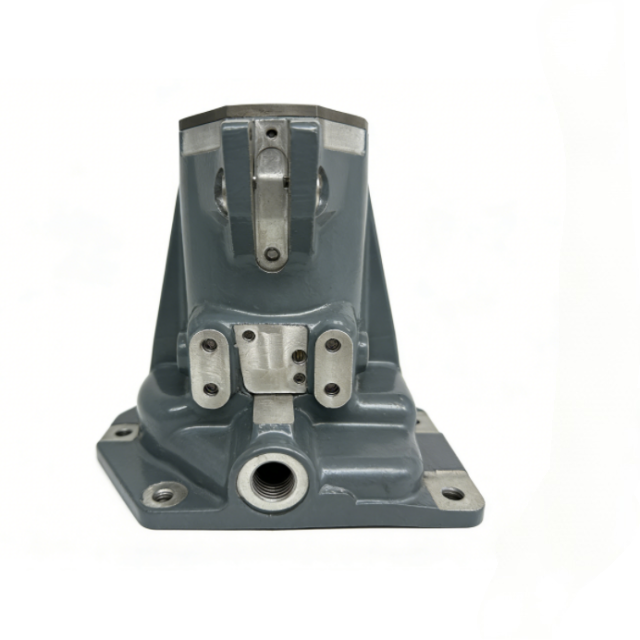
The right casting parts must deliver low mass, adequate stiffness, stable thermal behavior, corrosion resistance, and repeatable manufacturing. Few materials handle all of those requirements as efficiently as aluminum. For special vehicles, the benefit is not only weight reduction. It is also part consolidation.
cast aluminum parts allow ribs, bosses, internal passages, mounting pads, and enclosed cavities to be formed in one near-net-shape component. That reduces weldments, lowers machining time, and can simplify assembly stacks. In many cases, one casting replaces multiple fabricated or machined pieces.
Thermal performance is another major reason for adoption. Motor housings, inverter cases, battery trays, coolant manifolds, compressor bodies, reduction gear housings, and pump casings all benefit from aluminum’s thermal conductivity. The material also performs well in outdoor fleets because its oxide layer gives baseline corrosion resistance in wet and salted service.
For weight-sensitive programs, especially EV and hybrid platforms, aluminum supports better payload, improved range, and easier handling of unsprung mass. For large utility and construction vehicles, it can lower system weight without giving up complex geometry.
Chassis nodes, crossmembers, steering knuckles, and control arms
Transmission cases, differential housings, and gear reduction enclosures
Battery enclosures, e-axle housings, and motor casings
Brake caliper bodies, hubs, and specialty wheel components
Heat sinks, coolant manifolds, and electronics enclosures
Large integrated structures that replace welded assemblies
The first process question is simple: which route can produce the required geometry, integrity, finish, and annual volume at acceptable risk? No process is universally best. Sand casting may be correct for a low-volume housing, while vacuum die casting may be the only safe choice for a thin-wall, pressure-tight structural enclosure.
A disciplined RFQ review should compare at least eight variables:
Annual volume and launch ramp
Tooling investment and amortization plan
Lead time to first article
Wall-thickness capability
Dimensional repeatability
Porosity and leak risk
Heat-treatment compatibility
Secondary machining and finishing needs
| Process | Best Volume Range | Typical Strengths | Main Limits | Best-Fit Part Types |
Sand Casting | Prototype to low volume | Low tooling cost, fast design changes, large part capability | Rougher finish, more machining, lower repeatability | Large housings, prototypes, bridge parts |
Permanent Mold / Gravity Casting | Low to medium volume | Better structure and finish than sand, reusable tooling | Less suitable for very thin walls or complex undercuts | Structural brackets, housings, suspension parts |
Low-Pressure Permanent Mold | Medium volume | Controlled filling, improved consistency, good integrity | Higher process complexity than gravity casting | Pressure-tight or structural components |
HPDC | Medium-high to high volume | Thin walls, fast cycles, strong dimensional control | High tooling cost, gas porosity risk if poorly vented | Covers, enclosures, high-volume housings |
Vacuum Die Casting | High volume | Lower gas porosity, better soundness, improved leak resistance | Higher equipment and process-control demands | Critical thin-wall structural or sealed parts |
Sand casting remains useful when a program needs flexibility more than surface finish. It is often the right first step for oversized housings, development builds, and low-volume platforms. It also keeps tooling exposure lower while geometry is still evolving.
Permanent mold and low-pressure casting often provide the best balance for medium-volume programs. They usually outperform sand casting on dimensional stability and internal structure while avoiding the full capital burden of high-pressure die casting. For many fleets, that balance is ideal.
HPDC is typically chosen when annual demand is stable, wall sections are thin, and repeatability matters more than tooling flexibility. However, HPDC should never be selected on cost-per-piece alone. The part must be designed for venting, gating, ejection, and thermal balance from the start.
Vacuum die casting becomes valuable when gas porosity would compromise welding, pressure sealing, or structural performance. In that context, it is not an upgrade for appearance. It is a risk-control decision.
Investment casting with printed patterns for complex low-volume geometry
Shell mold casting for better finish than standard sand methods
Lost foam casting for one-piece shapes that are hard to core conventionally
Centrifugal casting for cylindrical or rotationally symmetric sections
Ceramic mold casting for niche precision requirements
Alloy selection should be based on service temperature, mechanical load, corrosion exposure, wall section, machining expectations, and finish requirements. A general “vehicle-grade aluminum” label is not enough. The casting route and the alloy have to work together.
In structural service, pure aluminum is too soft for most special-vehicle requirements. Castable AlSi and AlSiMg families are often preferred because they combine good fluidity with usable mechanical properties. Higher-temperature zones may require AlCu alloys, while exposed corrosion-sensitive parts may favor AlMg grades.
| Alloy Family | Primary Advantage | Typical Uses | Key Caution |
AlSi | Excellent castability and thin-wall filling | Covers, housings, general vehicle castings | Not always ideal for premium cosmetic anodizing |
AlSiMg | Balanced strength, corrosion resistance, heat-treat response | Structural nodes, wheels, suspension parts | Property targets depend on heat-treatment control |
AlCu | Better higher-temperature capability | Heat-stressed engine and drivetrain parts | Lower fluidity may require thicker or simpler sections |
AlMg | Strong corrosion resistance | Outdoor enclosures, exposed housings, brackets | Process control remains important for surface quality |
If a part will be machined heavily, the buyer should confirm chip formation, tool wear history, and chemistry stability from the supplier. If a part will be anodized, painted, plated, or powder coated, the alloy must be screened for finish compatibility before tooling release. If heat treatment is required, the casting route must support it consistently.
These details matter because many field issues begin after casting. A component may pass visual inspection but fail later in machining, leak testing, or finishing if the alloy-process pairing was weak.
Casting does not replace forging in every case. Forged aluminum is stronger in certain highly loaded applications because it benefits from controlled grain flow. That advantage matters in severe fatigue or impact conditions. Casting still wins when the design needs hollow sections, integrated features, or one-piece geometry that would be expensive or impractical to forge.
One rule remains consistent: cast aluminum should not be used as a primary sliding wear surface unless the design includes inserts, bushings, coatings, or another wear-control strategy.
Most cost and quality problems in aluminum casting start in CAD, not on the foundry floor. A manufacturable model reduces scrap, short shots, distortion, flash, sink, and tool modifications. For special-vehicle programs, DFM review should be completed before the purchase order for tooling is released.
Maintain uniform wall thickness wherever function allows.
Use gradual transitions instead of abrupt heavy-to-thin section changes.
Apply minimum draft, often around 1° to 2°, then increase it for texture, depth, or difficult ejection.
Add internal fillets and external radii to improve flow and reduce stress concentration.
Keep sealing faces and appearance-critical surfaces away from the parting line when possible.
Avoid undercuts that require slides unless they add clear functional value.
Ribs should add stiffness instead of increasing nominal wall thickness. Thick walls cool slowly, which raises sink and shrinkage risk. Bosses should be supported with fillets and controlled transitions. They should not become isolated hot spots. Core design should remove unnecessary mass, but it must also allow stable filling and solidification.
Ejector placement deserves early review. Ejection forces should go into robust structural zones, not thin cosmetic walls. Poor pin placement can mark the surface, distort the part, or create reject risk during trimming and handling.
Confirm functional datums, sealing faces, and machining stock.
Review wall sections, ribs, bosses, and local mass concentration.
Propose parting line, draft direction, and core strategy.
Evaluate gating, venting, and overflow feasibility with simulation.
Check heat-treatment and finishing compatibility.
Freeze drawing tolerances only after the process route is confirmed.
Supplier capability is not defined by machine size alone. It is defined by how consistently the supplier controls melt quality, filling, solidification, trimming, inspection, and traceability. For high-performance cast aluminum parts, these controls separate stable programs from expensive launch issues.
CAD review, manufacturability analysis, and tool design
Tool manufacture, dimensional verification, and trial readiness
Melt preparation, chemistry control, and holding discipline
Pouring or injection parameter control
Solidification and cooling management
Ejection, trimming, deburring, and runner removal
Heat treatment and secondary machining where required
Final inspection, NDT, packaging, and traceability release
A capable supplier should explain how chemistry is verified, how temperature is controlled, and how gas pickup is reduced. Common practices include degassing, filtration, flux management, and disciplined holding times. Overheated or poorly handled metal often increases hydrogen absorption and oxide formation, both of which raise defect risk.
Digital furnace controls, preventive maintenance, and stable thermal zones are useful indicators of maturity. They do not guarantee quality, but they usually support more repeatable results than informal shop-floor control.
Dimensional inspection should include CMM verification for critical interfaces. Internal integrity should be reviewed with X-ray, and CT scanning may be justified for high-risk geometry or new launches. Pressure-tight housings should have defined leak-test methods and sampling plans. Mechanical and metallurgical checks should confirm chemistry, hardness, and heat-treatment condition where specified.
For a program involving an OEM vehicle cast aluminum part, lot traceability, material certificates, control plans, and corrective-action discipline should be treated as standard requirements, not optional add-ons.
Finishing should be decided early because it can eliminate otherwise acceptable alloys or casting routes. A part that needs cosmetic anodizing may require a different alloy than a part that only needs powder coating. A part that will be machined into a sealing face may require tighter porosity control than a non-sealed enclosure.
Powder coating for durable corrosion protection on exposed fleet components
Painting for lower-cost color flexibility
Anodizing for wear and corrosion resistance on compatible alloys
Electroplating for decorative or conductive surfaces
Blasting or surface prep before coating
High-silicon die-cast alloys can be poor candidates for appearance-grade anodizing. Machined sealing faces should be checked for stock allowance and porosity risk before tool freeze. If repair welding or downstream joining is expected, the selected process must be evaluated for internal gas content and weldability.
When a program centers on custom cast aluminum part development, finish requirements should appear on the supplier review checklist at the same stage as alloy and tooling decisions.
Piece price rarely tells the full story. The real cost of special-vehicle castings includes tooling amortization, launch delay risk, scrap, machining loss, NDT coverage, packaging, logistics, change management, and field failure exposure. That is why supplier selection should use a scorecard rather than a single quote comparison.
Programs involving casting parts for special vehicles often have lower annual volumes than mainstream automotive work. That changes the economics. A medium-volume process with lower risk may deliver a better total result than a high-speed process with expensive tooling and difficult validation.
| Supplier Evaluation Area | Why It Matters | Why It Matters |
DFM Support | Part review, simulation, draft and parting-line feedback | Prevents tooling changes and early scrap |
Process Fit | Clear rationale for process versus volume and geometry | Reduces over- or under-specification |
Material Control | Chemistry verification, traceable feedstock, lot control | Stabilizes machining and mechanical properties |
Inspection | CMM, X-ray, leak testing, documented sampling plans | Limits field escapes and launch surprises |
Secondary Operations | Machining, coating, assembly, packaging capability | Simplifies supplier management and logistics |
Program Management | Revision control, timing discipline, corrective actions | Supports stable SOP and engineering changes |
Which process best fits the geometry, annual volume, and criticality?
Which alloy fits the temperature, corrosion, and load environment?
How will porosity, inclusions, and distortion be controlled?
What percentage of production receives internal inspection?
Which secondary machining and finishing steps are supported in-house?
What design changes would lower risk before tooling release?
Reliable special-vehicle castings come from process fit, alloy discipline, robust DFM, and verified production controls. The fastest path to lower risk is early engineering alignment before capital is locked.
Classify each part by load, temperature, leak risk, finish, and annual volume.
Request a formal process comparison and DFM review before tooling approval.
Validate alloy, heat-treatment, machining, and finish compatibility as one package.
Shortlist only suppliers that can document melt control, NDT capability, and traceability.
A: Permanent mold and low-pressure permanent mold casting are often strong fits. They usually balance tooling cost, structural quality, and repeatability better than sand casting, while avoiding the full capital burden of high-pressure die casting.
A: Many designs fall within roughly 2.0 mm to 4.4 mm, but the actual limit depends on alloy, flow length, gate design, feature depth, and quality targets. Thin walls should never be specified without process validation.
A: Suppliers reduce porosity through melt cleanliness, degassing, filtration, stable gating and venting, controlled fill parameters, and thermal balance. Vacuum die casting can further reduce gas-related defects in critical applications.
A: AlSiMg alloys, including A356-class materials, are common for structural castings because they combine good castability, corrosion resistance, and heat-treatment potential with useful mechanical properties.
A: High-silicon alloys can anodize unevenly and produce darker, blotchy surfaces. If cosmetic anodizing is required, the finish requirement should guide both alloy selection and casting-process choice before tooling begins.
A: Vacuum die casting is worth considering when a part is structurally critical, pressure-tight, weld-sensitive, or highly vulnerable to gas porosity. The added process complexity is justified when internal soundness is a launch or field-performance risk.


