
Views: 0 Author: Site Editor Publish Time: 2026-06-15 Origin: Site


In heavy-duty and off-highway vehicle programs, a failed structural component creates safety exposure, downtime, and expensive field recovery. Procurement engineers and vehicle designers therefore need a sourcing method that balances strength, toughness, complex geometry, environmental durability, and repeatable cost. The most reliable answer is a disciplined approach to material selection, casting-process choice, heat treatment, testing, and supplier qualification. Well-specified cast steel parts can deliver high impact resistance, good weldability, and near-net-shape geometry that fabricated weldments or machined billet often cannot match at scale. The result depends on more than a grade name. Buyers need confirmed chemistry ranges, process simulation, documented NDT, dimensional control, and traceable batch records. This guide provides a practical framework for engineering, sourcing, and implementing special vehicle castings with lower defect risk and better total cost performance.
Material Specificity Is Critical: Choosing between carbon grades and alloy cast steel parts for vehicle applications directly affects fatigue life, low-temperature toughness, wear resistance, and corrosion performance.
Process Dictates Performance and Economics: Sand casting, investment casting, coated sand, centrifugal casting, and limited high-pressure large-part casting alternatives each have distinct crossover points for volume, tolerance, and wall-thickness requirements.
Defect Prevention Starts Before Pouring: High load capacity cast steel parts require simulation-led gating and riser design, controlled melting and pouring temperatures, vacuum degassing where needed, and application-specific heat treatment—not just end-of-line inspection.
Quality Proof Must Be Documented: For safety-critical cast steel parts for special vehicle use, buyers should require traceable chemistry reports, mechanical test results, dimensional inspection, and NDT records tied to each heat or batch.
Welding Cast Steel Is Possible but Procedural: Joining brackets, reinforcements, or repair features to cast steel parts demands strict preheat, interpass control, specialty consumables, and slow cooling to minimize hydrogen cracking and residual stress.
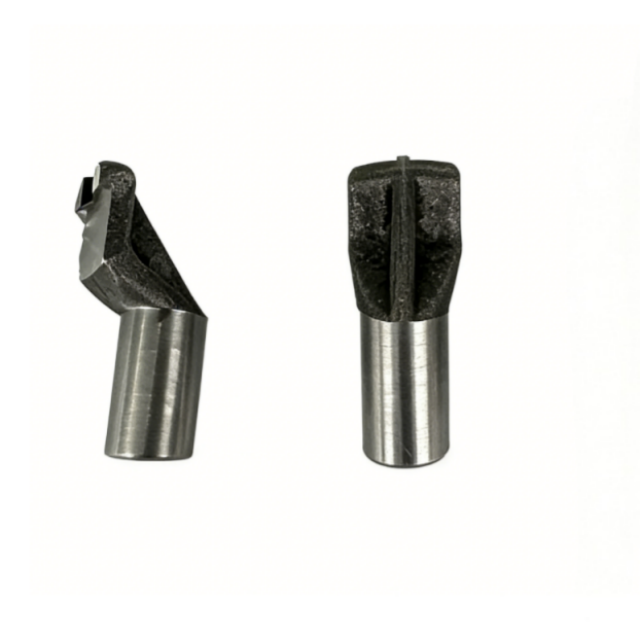
Special vehicle components carry mixed loads, irregular geometry, and service abuse that defeat simple manufacturing choices. Forging provides directional grain flow and high strength, but it struggles with large internal cavities, offset bosses, and ribbed reinforcement. CNC machining from billet delivers precision, yet material removal becomes expensive when the finished part contains deep pockets, thin webs, or complex hollow sections.
Economic crossover usually follows a predictable pattern. Prototype programs under roughly 500 units can justify machining or fabricated weldments. Annual demand between 500 and 1,000 units often supports rapid-tooling sand casting or hybrid fabrication plus machining. Once volumes move beyond 1,000 units, castings usually become the better near-net-shape route for complex parts. At 10,000 units and above, dedicated tooling often pays back through higher yield, lower machining time, and better dimensional repeatability.
Casting also gives engineers more freedom. It supports integrated bosses, fluid passages, localized reinforcement ribs, and smoother load transitions. That matters for axle housings, towing structures, dumper pivots, suspension knuckles, and body-lift components where geometry directly controls fatigue performance.
Material competition is rarely decided by tensile strength alone. Cast steel stands out because it combines impact resistance, ductility, and weldability. In dynamic structures, those traits are often more important than static hardness. Cast iron can offer wear resistance and damping, but it is less tolerant of shock loading and field modification. That limits its value in safety-critical vehicle hardware.
Aluminum and magnesium castings reduce mass, which can be useful in passenger vehicles and selected housings. However, mining, construction, oilfield, and military platforms often face overload spikes, abrasion, and severe impact. Under those conditions, steel remains the more damage-tolerant choice. Ductile iron may still compete on cost, but many programs reject it where welded reinforcements, overload survival, or crack-arrest behavior matter.
Heavy trucks, buses, trailers, semi-trailers, pickups, and vocational platforms use high load capacity cast steel parts in assemblies where failure consequences are high. These parts are common in both OE and aftermarket channels because they combine structural efficiency with production scalability.
Axles, suspension arms, and heavy-duty mounting brackets
Fifth wheels, towing eyes, kingpin supports, and coupling structures
Hydraulic housings, manifolds, and valve bodies
Shock absorber mounts and spring-seat structures
Transmission housings and driveline support components
Engine accessory supports and structural mounts
Cab tilt, dumper lift, and body mechanism structures
In each case, the casting route can remove weld seams, reduce assembled part count, and improve local load distribution.
Mining, forestry, military, municipal, construction, and oilfield fleets operate in abrasive, corrosive, and high-shock conditions. Those fleets often specify cast steel parts for extreme environment service because they survive damage modes that lighter or more brittle materials do not handle well.
Typical failure drivers include overload cracking, abrasive wear, corrosion-assisted fatigue, low-temperature embrittlement, and impact chipping from rock or debris. A suitable alloy, paired with proper heat treatment and inspection, can improve fatigue margin and reduce unscheduled replacement. For fleet operators, that translates into lower downtime and fewer emergency repairs.
Grade selection starts with the real duty cycle, not catalog familiarity. Carbon cast steel grades such as 20Mn, ZG20, ZG30, ZG35, ZG45, 25Mn, ZG55, ZG16Mn, and Q345B often suit structural parts that need baseline strength, reasonable weldability, and controlled cost. They are widely used for brackets, supports, housings, and medium-duty load members.
Alloy systems such as 35SiMnCrMo, ZG20CrNiMo, ZG30CrNiMo, ZG20MnCr, ZG20MnMo, SCMn3A, 5CrMnMo, and R20CrMo serve higher-stress programs. These grades improve hardenability, fatigue resistance, and impact absorption. They are often selected for towing hardware, heavy pivots, suspension components, and wear-loaded structures. Stainless cast steels such as CF3 and CF8 are better suited to corrosive media, splash zones, or fluid-contact parts where rust control and chemical stability matter.
Material selection becomes clearer when the part family is defined first. Axle and suspension structures usually need toughness, crack resistance, and weldability. Towing and coupling hardware needs higher yield strength and reliable impact performance. Hydraulic and transmission housings place more emphasis on machinability, pressure integrity, and dimensional stability. Wear-heavy parts benefit from alloy systems that accept hardening and maintain surface durability.
A buyer may prefer ZG35 over ZG45 when the program values weldability and toughness more than extra hardness. If shock loading rises and fatigue margin narrows, 35SiMnCrMo or ZG20CrNiMo may be more appropriate. The choice should always be validated against mechanical-property targets, section thickness, heat treatment, and service temperature.
Cross-border sourcing often fails because teams treat “equivalent” grades as identical. They are not. Similar labels may hide different carbon ranges, alloy additions, cleanliness levels, or heat treatment assumptions. A functional comparison is useful, but final approval should depend on testable chemistry and property limits.
| Chinese GB Grade | Approximate ASTM Match | Approximate DIN / EN Match | Typical Application Focus | Main Caution |
ZG20 / ZG230-450 | A27 65-35 | GS-38 | Lower-stress brackets and supports | Verify actual elongation and weldability targets |
ZG35 / ZG270-500 | A27 70-36 | GS-45 | General structural vehicle parts | Confirm normalized or QT condition |
ZG45 / ZG310-570 | A27 85-50 | GS-52 | Higher-strength load members | Weldability may decrease with higher carbon |
ZG20CrNiMo | A148 80-50 class range | Closest functional alloy grade | Impact-loaded structural parts | Low-temperature testing should be specified |
35SiMnCrMo | A148 higher-strength class range | Closest functional alloy grade | Shock-loaded and wear-prone parts | Heat treatment condition changes results sharply |
CF3 / CF8 | 304L / 304 cast stainless family | 1.4308 family equivalents | Corrosive transport and fluid-contact parts | Cast corrosion behavior depends on finish and media |
Service environment should drive the final specification. Mining and earthmoving parts need abrasion resistance, impact toughness, and resistance to dust-driven wear. Corrosive transport hardware may need stainless or alloyed corrosion-resistant options. Arctic fleets need defined Charpy impact values at specified sub-zero temperatures, not vague “low-temperature resistant” claims. Thermal-cycling zones need grades that retain strength and dimensional stability after repeated heating and cooling.
Special vehicle programs that operate across several climates should also define the worst-case condition. A casting that passes room-temperature tensile testing may still fail if low-temperature toughness or corrosion fatigue was never qualified.
As-cast microstructure rarely provides the best balance of toughness and strength. Heat treatment therefore needs to be specified as part of the RFQ, not left to supplier default practice. Normalizing refines structure and improves consistency. Annealing improves machinability and reduces residual stress. Quenching and tempering increases strength and toughness when section size and alloy chemistry support it. Stress relieving helps stabilize parts after welding, straightening, or heavy machining.
Documentation should match the heat treatment route. Buyers should request furnace charts, soak times, quench media details where relevant, hardness maps, and post-treatment test reports. Without those records, the mechanical-property claim is incomplete.
| Heat Treatment | Primary Purpose | Typical Use Case | Records to Request |
Annealing | Reduce hardness and relieve stress | Machining-intensive housings | Furnace chart, hardness check |
Normalizing | Refine grain and improve uniformity | General structural castings | Furnace chart, tensile and hardness results |
Quench and temper | Raise strength with controlled toughness | Heavily loaded suspension and towing parts | Furnace chart, hardness map, tensile and impact tests |
Stress relieving | Reduce residual stress after processing | Weld-repaired or heavily machined parts | Cycle record, dimensional verification |
For large and low-to-medium volume programs, sand casting remains the most practical route for cast-steel special vehicle parts. It supports large masses, variable wall thickness, and complex cores at reasonable tooling cost. Coated sand processes improve repeatability, mold strength, and surface finish. That helps with brackets, chassis nodes, towing structures, and suspension components.
3D-printed sand molds add speed. They reduce pattern lead time and support rapid design changes during prototype development. This is useful when the program still expects dimensional revisions after first article inspection.
Investment casting makes sense when the part is smaller, geometrically complex, and tolerance-sensitive. It can reduce machining on valve bodies, compact housings, linkages, and precision interfaces. The process usually costs more per kilogram than sand casting, so its value appears when the geometry is intricate enough to offset secondary machining and assembly.
Centrifugal casting is best for ring-shaped or tubular parts such as sleeves, liners, drums, and similar rotationally symmetric components. It delivers dense structures and good wall integrity in those shapes. It is not a fit for asymmetrical vehicle structural castings, where core complexity and directional geometry dominate the design.
Conventional high-pressure die casting is a non-ferrous manufacturing route. It is common for aluminum and magnesium, not for large structural steel castings. Steel’s melting temperature and die wear behavior make mainstream HPDC unsuitable for the part classes discussed here. Procurement teams should avoid confusing aluminum megacasting trends with steel casting capability.
Large aluminum die castings are reducing part count in passenger EV platforms. They lower assembly labor and can replace many stamped or welded components. That shift matters to vehicle manufacturing strategy, but it does not eliminate the need for steel in special vehicle load zones. Towing interfaces, highly loaded mounts, severe-impact structures, and heavily abused off-highway components still favor steel because strength, toughness, and damage tolerance remain the governing requirements.
Process selection works best when part geometry, volume, and performance are considered together rather than sequentially.
| Manufacturing Route | Best Annual Volume | Typical Part Mass | Tolerance Capability | Best Fit | Main Limitation |
CNC machining from billet | 1-500 | Low to medium | Very high | Prototypes and urgent specials | High material waste and machining cost |
Fabricated weldment plus machining | 100-1,000 | Medium to high | Moderate | Simple geometries with accessible welds | More weld distortion and inspection effort |
Sand casting | 500-5,000+ | 10 kg to several tons | Moderate | Large structural parts and housings | More machining than investment casting |
Coated sand casting | 1,000-10,000+ | Low to high | Moderate to good | Repeatable vehicle structures | Higher tooling discipline required |
Investment casting | 1,000-50,000+ | Very low to about 50 kg | High | Complex small parts | Part size and cost constraints |
Serious steel casting needs industrial melting, controlled chemistry, and disciplined inspection. Steel pours near 1,600°C, which brings oxidation risk, slag control demands, refractory management, and significant safety controls. Small-shop or improvised methods rarely provide reliable chemistry, gas control, or repeatable heat treatment. For structural vehicle parts, industrial foundry capability is not optional.
Weak RFQs create weak quotations. The foundry should receive enough data to estimate gating, machining stock, testing scope, and process risk correctly. A complete package usually includes:
3D CAD model and 2D drawing with datums
Material grade and required heat treatment condition
Critical dimensions and tolerance bands
Machined surfaces versus as-cast surfaces
Surface finish requirements
NDT acceptance level by zone or feature
Mechanical-property targets, including impact requirements where needed
Traceability, marking, and documentation expectations
This level of definition reduces rework, quote revisions, and disagreement during sample approval.
Design choices strongly affect defect rate and machining burden. Abrupt wall changes create hot spots and shrinkage risk. Sharp corners raise stress concentration and crack initiation potential. Excess local mass raises cycle time and porosity probability. Overly generous machining stock can also increase distortion after heat treatment.
Good casting design usually follows several simple rules:
Use gradual wall transitions where the geometry allows
Add fillets at high-stress intersections
Reduce isolated heavy sections
Coordinate machining stock with actual foundry capability
Place datums on stable, inspectable surfaces
Prototype approval should lead into a controlled production release rather than a loose handoff. A practical validation sequence is:
Approve design intent through prototype casting and basic fit check.
Complete first-article dimensional inspection on critical interfaces.
Validate mechanical properties and required NDT on a pilot lot.
Freeze tooling, heat treatment, machining route, and inspection plan.
Define requalification triggers for any later process change.
Chemistry changes, tooling changes, major pattern repairs, altered heat treatment, or new machining fixtures should all trigger a documented review.
Steel casting quality is largely determined during solidification. Dendritic growth, segregation, and uneven cooling can leave internal defects that are invisible until service failure. Common risks include shrinkage porosity, blowholes, gas porosity, slag inclusions, non-metallic inclusions, cold shuts, misruns, hot tears, and microcracks.
Part geometry often drives which defect dominates. Heavy junctions are more prone to shrinkage. Long thin sections are more prone to misruns. Dirty melt practice can increase inclusions. The defect pattern should shape both process controls and NDT coverage.
High-quality foundries reduce risk before the first mold is filled. Simulation platforms such as MAGMA or ProCAST help optimize gating, feeders, and solidification sequence. That work improves feeding efficiency and reduces the chance of hidden shrinkage. During melting and pouring, temperature control also matters. Medium carbon steel may pour around 1570°C to 1600°C. ZG35CrMo may require about 1580°C to 1610°C. ZG20CrMnTi-type steels may run around 1560°C to 1590°C.
Underheating hurts fluidity and raises misrun risk. Overheating increases oxidation, gas pickup, and refractory attack. Reliable foundries verify temperature with calibrated instruments rather than operator guesswork.
Premium suppliers add controls that many buyers never see on a quotation. Vacuum degassing can reduce dissolved gases and improve internal quality. Slag management, deoxidation practice, melt cleanliness, and controlled refining all influence fatigue life. These disciplines matter most where cast steel parts for vehicle programs run under repeated shock loads or require strict NDT acceptance.
For critical structures, the foundry should explain how it controls cleanliness and how it decides whether weld repair is permitted, limited, or prohibited by part zone.
Testing should follow part criticality rather than generic factory habit. Safety-critical structures often require a baseline stack that includes spectrometer chemistry verification, tensile testing, hardness testing, and Charpy impact testing where service temperature demands it. Metallographic checks can verify structure and heat treatment response. UT, MT, and radiography or digital X-ray are common for flaw detection in critical sections.
Dimensional verification should not stop at calipers. Mounting faces, bores, and datums often need CMM or optical inspection. The testing plan should also identify who approves repair, reinspection, and concession requests.
A towing structure does not need the same acceptance rules as a cosmetic cover, but it does need stricter limits than a low-risk wear item. Buyers should classify the part before nomination and define:
Maximum allowable porosity by zone
Permitted and prohibited repair-weld areas
NDT method and sample frequency
Reinspection requirements after repair
Lot rejection and containment rules
This avoids disputes when defects appear during pilot production.
Document control is part of product quality. Safety-critical cast steel parts for special vehicle programs should carry heat number traceability, batch-linked NDT reports, material certificates, heat treatment records, and final inspection results. Those records protect both the supplier and the buyer during audits, warranty investigations, and fleet incidents.
Post-cast work usually includes shot blasting, riser removal, straightening, stress relief where required, rough machining, finish machining, and final bore or thread work. Heat treatment condition, residual stress, and hardness directly affect tool life and dimensional stability. A low-price casting can become expensive if stock allowance is excessive or distortion forces repeated setups.
Machining strategy should therefore be reviewed during sourcing. Datum selection, fixture design, and distortion history matter as much as raw casting cost.
Field modification and repair remain common in special vehicles. Brackets may be added to axle housings. Reinforcements may be attached to existing structures. Steering or suspension hardware may be adapted for a fleet-specific body. Welding is possible, but the risk is real. Carbon equivalent, section thickness, prior heat treatment, and restraint level all affect cracking tendency.
Welding should begin only after the substrate is identified. Cast steel, cast iron, and forged steel behave differently. Teams should check section thickness, contamination, service history, previous repair, hardness, and alignment needs. If the part already carries a strict heat treatment condition or a critical NDT class, the repair plan should be approved through a controlled procedure.
Standard mild-steel filler is not always appropriate. Cast steel-to-carbon steel joints may require low-hydrogen consumables or dissimilar-metal fillers depending on chemistry and restraint. Difficult repairs sometimes use nickel-based options such as Hobart Nickel 99 or high-crack-resistance electrodes such as Harris Super Missile, but final selection should follow a qualified welding procedure specification. TIG offers precise root control. MIG improves deposition rate. SMAW remains practical for field repair and awkward access.
Cracking risk drops when heat input and hydrogen are controlled. Good practice usually includes preheat, controlled interpass temperature, short bead sequencing, moisture-free consumables, clean joint preparation, restraint control, and slow cooling under insulation. Some parts also need post-weld stress relief or renewed NDT. The acceptance rule should depend on service criticality, not workshop convenience.
Minor surface repair outside critical zones may be acceptable with documented reinspection. Structural or pressure-boundary repair is a different category. It often requires engineering approval, qualified procedure review, and post-repair validation. If the defect sits in a highly stressed transition or a prohibited repair zone, replacement is usually the safer choice.
Total cost should include pattern cost, tooling maintenance, yield loss, machining time, scrap rate, inspection scope, packaging, and freight. A casting may look expensive at first quote, yet become cheaper over the program life because it reduces material waste and machining hours. The financial case improves further when one casting replaces several fabricated pieces and their weld inspection steps.
Low piece price can hide high operating cost. A field failure brings vehicle downtime, labor, emergency logistics, claim exposure, and reputation damage. This is why sourcing decisions for cast steel parts for special vehicle applications should be based on verified process capability rather than quotation price alone.
Supplier shortlisting should focus on evidence, not presentation quality. Relevant checkpoints include furnace capacity, pattern support, sand-process capability, machining resources, heat treatment control, CMM access, laboratory capability, and documented experience with cast steel parts for vehicle programs. Teams should also confirm whether the supplier understands export documentation, grade mapping, and critical-part traceability.
An effective audit usually covers process control, defect history, and response discipline. Useful questions include:
How are gating and riser designs validated before production release?
Which defects are checked in-process, and which are checked only after heat treatment?
What is the repair-weld policy by part category and zone?
Can the supplier provide chemistry, mechanical, NDT, and dimensional data by batch?
What are the scrap rate and on-time delivery history for comparable parts?
Lead time planning should cover pattern build, mold trials, first castings, machining fixture setup, first article inspection, pilot lot validation, and ramp-up. Common delays include tooling revision, heat-treatment distortion, machining bottlenecks, and failed NDT that forces gating or process changes. Program schedules improve when those risks are named before the RFQ goes out.
Several warning signs deserve immediate scrutiny:
Grade equivalency claims without chemistry limits or property targets
No written NDT plan for critical sections
Outsourced heat treatment or machining with weak traceability
No discussion of pouring temperature, simulation, or defect prevention
Quotes that exclude tooling, machining stock, or inspection scope
When these gaps appear early, they usually appear again during production.
Cast steel remains the preferred material route for special vehicle components that must combine strength, impact resistance, geometry flexibility, and practical weldability in severe service. Strong results come from disciplined grade selection, realistic process choice, early definition of heat treatment and NDT, and supplier approval based on records rather than claims.
Finalize CAD, drawings, tolerances, and critical zones before issuing RFQs.
Lock material grade, heat treatment, and NDT acceptance criteria into the specification.
Request batch-level chemistry, mechanical, dimensional, and traceability records.
Shortlist only foundries with proven experience in comparable vehicle programs.
A: Cast steel offers better ductility, impact resistance, and weldability. Those traits matter in towing hardware, suspension parts, and structural mounts that face shock loading and field repair. Cast iron can be cost-effective, but it is usually less tolerant of overload and crack propagation.
A: Common structural choices include ZG20, ZG35, ZG45, and Q345B-related cast grades. Higher-duty parts often move to alloy systems such as 35SiMnCrMo, ZG20CrNiMo, or ZG30CrNiMo. Final selection should depend on section thickness, heat treatment, weldability, and impact requirements.
A: Sand casting usually fits larger, heavier, and lower-to-medium volume parts such as axle housings, brackets, and towing structures. Investment casting is better for smaller parts with intricate geometry, tighter tolerances, and higher surface-finish requirements. Cost and machining reduction should be compared together.
A: The best controls begin with part design and simulation. Uniform section transitions, proper feeder placement, optimized gating, and controlled solidification paths reduce shrinkage risk. Stable pouring temperature and melt cleanliness also matter. End-of-line inspection alone cannot prevent the defect.
A: They can, but the joint should follow a qualified procedure. Preheat, interpass control, low-hydrogen consumables, clean surfaces, and slow cooling are often required. The exact filler and process depend on casting chemistry, thickness, restraint, and whether the part has been heat treated.
A: A complete package typically includes heat number traceability, chemistry reports, tensile and hardness results, impact data where required, heat treatment records, dimensional inspection results, and NDT reports such as UT, MT, or radiography. The records should link clearly to the delivered batch.


