
Views: 0 Author: Site Editor Publish Time: 2026-06-16 Origin: Site


In heavy-duty transport, mining, construction, and agricultural fleets, component failure is a cost event before it becomes a repair event. It stops machines, exposes operators to safety risk, and drives warranty claims, spare-parts demand, and missed utilization targets. For core load-bearing components, engineering teams usually compare steel weldments, aluminum castings, and engineered cast iron parts. The correct choice depends on real duty cycles, not simple weight targets.
For special vehicles, iron still sets the baseline where loads are high, vibration is constant, wear is severe, and thermal cycling is unavoidable. Proper grade selection can improve stiffness, control noise, resist local deformation, and stabilize critical sealing faces. The decision must cover more than metallurgy alone. It also includes casting method, core design, machining capability, heat treatment, inspection, coating, and supplier process discipline. This guide gives a practical framework for selecting the right material grade, manufacturing route, and foundry model for reliable service life.
Material Selection Directly Controls Service Life: Choosing between Gray Iron, Ductile Iron, CGI, and ADI affects damping, tensile strength, thermal fatigue resistance, machinability, and wear life in harsh environments.
Cast Iron Still Wins Where Loads and Heat Are Severe: Brake systems, diesel engine blocks, differential carriers, suspension brackets, and hydraulic housings continue to depend on high strength cast iron parts because aluminum and thin-wall fabrications often sacrifice stiffness, durability, or dimensional stability.
Custom Cast Iron Parts Unlock VAVE Gains: Replacing multi-piece weldments with single-piece castings can reduce weld fatigue risks, simplify assembly, improve dimensional consistency, and lower total manufacturing cost.
Process Capability Matters as Much as Material Grade: Near-net-shape sand casting, core design, in-house heat treatment, precision CNC machining, and disciplined defect prevention determine whether the final part performs as designed.
Supplier Qualification Is a BoFU Decision Lever: For special vehicles, prioritize foundries with IATF 16949-level systems, robust NDT, traceable metallurgy, machining capability, coating options, and real experience with cast iron parts for harsh environment duty cycles.
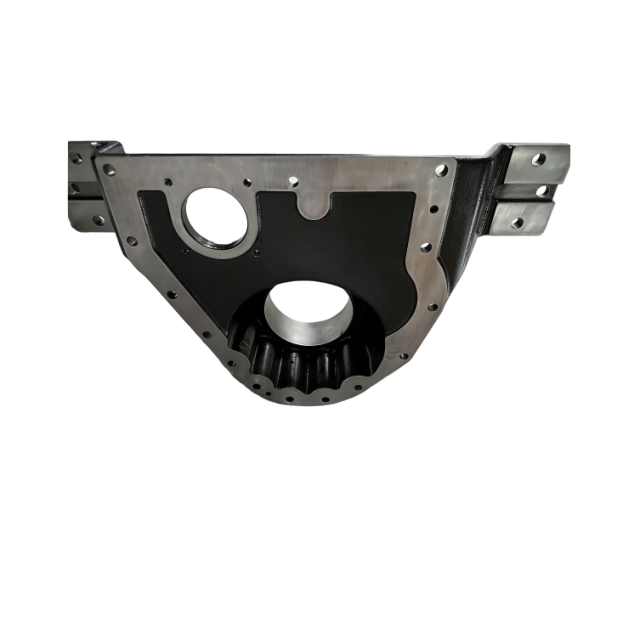
Special vehicles work under a combination of loads that punish light materials and weak joints. They carry mass, absorb impact, hold bearing alignment, and survive frequent heating and cooling. They also face abrasive dust, mud, salt spray, and shock loading. In those conditions, material behavior matters at the microstructure level. Stiffness, damping, wear resistance, and dimensional stability often decide whether a part lasts for years or fails early.
The graphite structure inside iron gives it a damping advantage that steel and aluminum rarely match. That matters in driveline housings, flywheel housings, transmission cases, and brake components. Vibration energy is absorbed rather than transmitted across the entire assembly. Lower vibration means less fastener loosening, less bracket fatigue, and more stable sensor performance in rough service.
Gray iron remains difficult to replace in rotors and drums because it handles frictional heat well and resists thermal distortion. It also offers favorable self-lubricating behavior at contact surfaces. In exhaust manifolds and turbo-adjacent housings, dimensional stability matters just as much as strength. When temperature swings are sharp, sealing faces must stay flat enough to prevent leakage and crack initiation.
Many structural vehicle parts do not fail because of ultimate tensile limits alone. They fail because they bend, creep out of alignment, fret at interfaces, or crack after long cyclic loading. In those situations, section stiffness and compressive strength are critical. Properly specified high strength cast iron parts help maintain geometry under repeated service loads.
Aluminum alloys reduce mass, but they can deform at loaded interfaces and wear faster in contaminated service.
Welded steel assemblies offer high nominal strength, yet weld seams, heat-affected zones, and distortion remain common fatigue drivers.
Engineered iron castings support rigid one-piece geometry, reduce tolerance stack-up, and lower the risk of local plastic deformation.
That geometric stability matters in hubs, differential supports, spring hangers, hydraulic bodies, and heavy mounting brackets. If the part holds alignment, bearings run truer, seals last longer, and downstream wear slows.
Friction and contamination create a punishing mix. Braking surfaces, gear housings, pump casings, and swash plates see abrasion, pressure pulses, impact, and thermal stress in the same duty cycle. For those applications, wear resistance cast iron parts remain a practical choice because they combine hardness potential with good machinability and stable casting geometry.
Dust, mud, road salt, and washdown exposure also reshape the selection process. Components such as axle housings, hydraulic valve bodies, and support brackets often need more than base-metal strength. They need coating compatibility, reliable sealing faces, and predictable performance after long idle periods or seasonal corrosion cycles. Properly specified cast iron parts for harsh environment service can deliver that balance when paired with primers, e-coat, industrial paint, or rust-preventive treatment on machined surfaces.
Iron is not the correct answer for every component. Thin-wall covers, highly weight-sensitive structures, and compact passenger-vehicle enclosures may favor aluminum or magnesium. Some integrated designs also eliminate separate brackets and housings entirely. An aluminum manifold-head integration is one example where weight and package efficiency can outweigh iron’s thermal and damping advantages.
The key decision boundary is simple: material should follow function. For special vehicles, the main question is not which option is lightest. It is which option delivers the best whole-life performance under real heat, shock, stiffness, and contamination requirements.
At the concept and RFQ stage, sourcing teams need more than a simple material comparison. They need a system-level view that includes manufacturability, field failure modes, and lifecycle cost. The matrix below frames the trade-offs that most often drive heavy-vehicle decisions.
| Criteria | Engineered Cast Iron | Cast Aluminum Alloys | Welded Steel Assemblies |
Density / weight impact | High mass, favorable for damping and stiffness | Low mass, strong weight advantage | Moderate to high, depends on design |
Compressive strength | Excellent | Moderate | High |
Tensile strength and elongation | Grade dependent; moderate to high | Moderate | High to very high |
Fatigue resistance under cyclic heavy loading | Strong in ductile iron and ADI | More sensitive to local fatigue and interface wear | Often limited by weld quality and HAZ |
NVH damping | Excellent | Low | Low |
Thermal conductivity and thermal fatigue resistance | Very good, especially gray iron and CGI | Good conductivity, but less stable in some high-load interfaces | Good strength, but distortion risk at welds |
Wear resistance | Very good to excellent with correct grade and treatment | Generally weaker in abrasive duty | Moderate, often needs added treatment |
Corrosion behavior and coating needs | Needs practical coating strategy | Natural oxide helps, but galvanic issues remain | Needs robust coating protection |
Machinability | Good to excellent | Excellent | Moderate, varies by weld distortion and hardness |
Complex internal cavities | Excellent with sand cores | Good, process dependent | Poor without multi-part fabrication |
Tooling and piece-part economics | Moderate tooling, strong part economics | Higher material cost, tooling varies | Low tooling, higher labor and assembly cost |
Typical failure modes | Porosity risk, brittle behavior in wrong grade selection | Fatigue cracking, thread pullout, local deformation | Weld fatigue, distortion, stack-up variation |
Best-fit vehicle systems | Brakes, powertrain housings, heavy structural supports | Light enclosures, covers, weight-critical housings | Simple frames, low-complexity structures |
Cast iron usually delivers the best value when the part must stay rigid, resist wear, and remain stable through heat and vibration. That does not mean every iron grade works equally well. Function should drive material choice from the start.
Use gray iron where friction, heat flow, and damping dominate, such as rotors, drums, and many housings.
Use ductile iron where structural loading, impact resistance, and fatigue life dominate, such as knuckles, brackets, and supports.
Use CGI where diesel power density and block stiffness rise together.
Use ADI where high strength, wear life, and mass efficiency are needed in gears or driveline parts.
For sourcing teams, the best value is rarely the lightest quote. It is the option that controls warranty risk, machining yield, and field reliability at the same time.
Iron should not be specified as a generic category. Graphite form, matrix structure, and heat treatment change performance significantly. A basic grade table helps align metallurgical choice with actual service conditions.
| Iron Grade | Key Strengths | Typical Weaknesses | Best-Fit Applications |
Gray Iron | Excellent damping, machinability, thermal behavior, compressive strength | Low ductility and lower tensile performance | Brake rotors, drums, flywheels, exhaust manifolds, housings |
Ductile Iron | Higher strength, elongation, impact resistance, fatigue life | Less damping than gray iron | Knuckles, hangers, brackets, differential supports, mounts |
CGI | Higher stiffness and strength than gray iron with favorable thermal stability | More demanding process control and machining | Diesel blocks, cylinder structures, powertrain housings |
ADI | Very high strength, strong toughness-to-weight ratio, excellent wear resistance | Heat treatment control is critical | Gears, driveline parts, loaded brackets, wear-critical components |
Gray iron uses flake graphite, which breaks up vibration waves and improves heat flow across the section. That combination makes it a natural fit for brake drums, brake rotors, caliper bodies, clutch plates, flywheels, transmission housings, and exhaust manifolds. It machines cleanly and maintains good compressive performance. Its main limitation is low ductility. When the design expects impact loading or large tensile stress, another grade usually fits better.
Ductile iron uses nodular graphite. That microstructure raises tensile strength and elongation while improving toughness. It performs well in steering knuckles, control arms, torque rods, spring hangers, suspension brackets, hitch parts, and engine mounts. In many cases, it replaces fabricated steel while simplifying the geometry. That can remove weld seams, reduce fixtures, and improve repeatability without losing structural confidence.
Compacted graphite iron sits between gray and ductile iron in structure and performance. It gives designers more stiffness and strength than gray iron while preserving useful thermal behavior. That balance makes CGI suitable for advanced diesel engine blocks and high-output powertrain structures. Public engine programs, including FCA 3.0L diesel and Ford 2.7L architectures, show that iron remains relevant in modern efficiency-focused designs when duty cycles are severe.
ADI starts as ductile iron and gains its final property set through austempering. The result can approach steel-like strength while keeping good toughness and wear performance. It is often chosen for gears, differential parts, driveline components, and heavily loaded brackets. ADI becomes attractive when the part needs high performance but also benefits from cast geometry, lower machining content, or fewer assembly steps.
Grade name alone does not define final performance. Heat treatment, hardness range, and local surface condition can change fatigue life and wear behavior significantly. Austempering raises strength. Stress relief improves dimensional stability. Normalizing can refine structure. Local hardening may protect contact zones. Some components also use chilled areas or selectively hardened wear bands. Reliable results depend on melt chemistry, solidification control, and repeatable heat-treatment discipline.
Application fit matters more than broad material preference. The same foundry may produce a brake drum, a hydraulic casing, and a suspension bracket, but each part serves a different failure-risk profile. A useful review starts with the vehicle class and the dominant service load.
Heavy trucks depend on rigid, durable parts that preserve alignment across long mileage and heavy payloads. Common iron applications include:
Powertrain: diesel engine blocks, crankcases, flywheels, clutch plates, flywheel housings, engine brake parts, transmission housings, turbo bearing housings, damper rings, and engine mounts.
Suspension, steering, and driveline: steering knuckles, control arms, torque rods, spring hangers, differential carriers, cases, slip yokes, flanges, and hitch components.
Wheel-end and braking: brake drums, hubs, caliper bodies, brake anchors, torque plates, and air-disc or hydraulic-disc brake castings.
In fleet economics, the material choice is tied to uptime. Better fatigue resistance and stable dimensions reduce wheel-end heat, bearing wear, brake noise, and unplanned service events.
These machines combine contamination, impact, and long torque cycles. They often require cast iron parts for special vehicles that can survive abrasive dust, mud ingress, washdown exposure, and heavy shock loads. Typical parts include chassis bases, bearing covers, gear housings, reducer housings, engine bodies, hydraulic pump casings, valve housings, control pistons, swash plates, and adjacent mounting structures near counterweights or implements.
Sealing integrity becomes especially important in these sectors. A casting that holds flatness and bore alignment supports better seal life, less lubricant loss, and fewer contamination-driven failures. Those outcomes often outweigh small weight savings.
Brake components, exhaust manifolds, transmission housings, and flywheel housings often face two problems at once: heat and vibration. Iron handles both well. It limits thermal distortion and dampens structure-borne noise. That helps protect fasteners, gaskets, bearings, and adjacent electronics. In operator-facing equipment, better damping also improves perceived quality because less harshness reaches the cab or service body.
Engineering value is often created during design conversion, not only during material substitution. A welded assembly can meet strength targets on paper while still carrying avoidable manufacturing cost and field risk. That is why many OEMs review whether custom cast iron parts can replace fabricated structures.
Multi-piece weldments accumulate variability. Each cut, fixture, weld pass, and secondary machining step adds cost and dimensional risk. Distortion after welding can force rework. Heat-affected zones can lower fatigue resistance. Long assemblies can also build tolerance stack-up that complicates bearing alignment or seal compression. A single casting can integrate ribs, bosses, pockets, and channels without those joint-related weaknesses.
Welded-to-cast conversion is usually justified through Value Analysis and Value Engineering. The pattern cost is visible, but many savings are hidden in production and service. Teams should evaluate:
pattern and tooling investment
piece-part price at target volume
machining hour reduction
fewer purchased subcomponents
lower assembly labor
reduced fixturing and inspection burden
warranty exposure and downtime cost
When annual volume is stable and part geometry is complex, a casting often improves both cost and reliability. The benefit becomes stronger when field failures are expensive.
Commercial success depends on early design discipline. The following rules strongly affect quote accuracy and casting yield:
Keep wall thickness as uniform as the load case allows.
Use generous fillet radii to reduce stress concentration.
Add proper draft for mold release and pattern life.
Define machining stock only where functional surfaces require it.
Plan internal channels with core support and venting in mind.
Identify datums and critical tolerances before fixture design starts.
Early collaboration between the OEM and the foundry lowers redesign risk. It also helps avoid unrealistic tolerances that add machining cost without improving function.
Process route affects integrity as much as grade selection. A strong alloy cannot compensate for poor feeding, unstable cores, or weak machining control. Structural performance starts in mold design and ends with validated final inspection.
Sand casting remains the main route for heavy iron parts because it supports thick walls, complex ribbing, and internal cavities at practical cost. Sand cores form coolant passages, oil channels, hollow sections, and enclosed housings. The process also suits low-to-medium production volumes common in heavy vehicles and equipment. Machining these forms from bar or billet would waste material and drive part cost sharply upward.
As-cast surfaces are rarely sufficient for functional interfaces. Bearing bores, hub centers, brake mounting pads, mating faces, and hydraulic sealing surfaces need controlled flatness, concentricity, and surface finish. In-house CNC machining shortens the feedback loop between casting and finishing. It also improves accountability when dimensional corrections are needed. For critical housings, datum strategy should be tied to how the part locates in the final assembly, not only to machining convenience.
Stress relief, normalizing, austempering, and hardness control all influence final behavior. Some parts need better toughness. Others need higher wear resistance or more stable dimensions after machining. Verification should include chemistry checks, hardness testing, and mechanical-property review tied to each lot. Where performance risk is high, metallography and section validation help confirm that the intended microstructure was achieved consistently.
Corrosion strategy should match field exposure. Road salt, fertilizer residue, mining slurry, and coastal moisture do not attack parts the same way. Common protection methods include primer plus paint, e-coat, localized masking of machined surfaces, and rust-preventive oil during storage and shipment. Good coating work also depends on casting cleanliness and surface preparation. A strong coating system cannot compensate for trapped sand, poor drainage design, or inaccessible pockets.
Foundry selection should focus on repeatability, not only price. Structural castings can look acceptable while hiding internal defects or process drift. Buyers need objective screening criteria that connect supplier capability to part performance.
Special-vehicle programs benefit from automotive-style control systems even when formal compliance is not mandatory. Useful indicators include IATF 16949 or ISO 9001 quality systems, controlled work instructions, traceability by heat and lot, corrective action discipline, and change control. Foundries supplying new launches should also support APQP or PPAP-style documentation where required. That reduces risk during approval and later engineering changes.
Critical defect risks include porosity, shrinkage cavities, inclusions, micro-cracking, core shift, and hidden discontinuities exposed only during machining. Mitigation starts with sound gating, risers, melt chemistry, inoculation control, and core stability. Validation methods may include:
X-ray or radiographic inspection for internal voids
ultrasonic testing for section integrity
magnetic particle inspection for surface-breaking cracks
pressure testing for leak-sensitive housings
sectioning and metallography during process validation
These checks should match the part’s risk level. A brake or hydraulic component deserves tighter screening than a low-risk counterweight bracket.
Capability should extend beyond raw casting. In-house machining, heat treatment, coating, light assembly, and export-ready packaging reduce handoff risk and shorten lead times. Capacity planning also matters. A supplier may produce prototypes well but struggle with steady annual demand or mixed-model scheduling. The best partners support failure analysis, redesign discussion, and continuous improvement after SOP, not only before the first shipment.
Verify experience with structurally critical heavy-section castings.
Confirm success with gray iron, ductile iron, CGI, or ADI as required.
Review machining, metallurgy, and heat-treatment capability in-house.
Audit NDT, dimensional inspection, and traceability controls.
Check coating options, packaging standards, and delivery resilience.
A qualified supplier should also be able to review welded-to-cast conversion opportunities, estimate process risk early, and recommend realistic design adjustments before tooling release.
Cast iron often benefits from high recycled content, which supports strong material circularity. It also delivers long service life in rebuildable heavy-vehicle systems, an important advantage in whole-life environmental analysis. Aluminum may offer use-phase benefits where weight reduction is the dominant driver, but those benefits are not universal. For special vehicles, sustainability should be evaluated by part function, service life, repairability, and replacement frequency. A longer-lasting iron casting can provide both economic and environmental value when downtime and premature replacement are considered.
For load-bearing, wear-critical, thermally stressed, and vibration-sensitive systems, engineered iron remains the dependable choice in many special-vehicle applications. The best results come from pairing the right grade with disciplined casting, machining, heat treatment, inspection, and coating. The next step is not a generic price request. It is a structured manufacturability review.
Prepare CAD models, drawings, annual volume, and target material grade.
Define machining surfaces, coating needs, validation standards, and duty-cycle data.
Shortlist foundries with metallurgy, NDT, CNC machining, and launch documentation capability.
Request a welded-to-cast ROI review before finalizing the sourcing path.
A: They usually provide better stiffness, damping, wear resistance, and thermal stability under high loads. Aluminum reduces weight, but it can deform faster at loaded interfaces and may show earlier fatigue or wear in abrasive duty.
A: Gray iron has flake graphite, so it offers strong damping and good thermal behavior. Ductile iron has nodular graphite, which raises tensile strength, elongation, and impact resistance. Gray iron fits brakes and housings. Ductile iron fits structural parts.
A: CGI is a strong choice for high-output diesel blocks and other parts needing more stiffness with good thermal stability. ADI fits gears, driveline parts, and wear-critical structures that need very high strength and long wear life.
A: Yes, when the geometry allows consolidation. A one-piece casting can remove weld seams, reduce distortion, simplify machining setups, and improve repeatability. The business case is strongest when warranty risk, labor content, or tolerance stack-up is already a problem.
A: Buyers should look for IATF 16949-level or ISO 9001 systems, traceable material records, dimensional reports, and risk-based NDT. Common inspection methods include radiography, ultrasonic testing, magnetic particle inspection, hardness checks, and lot-based metallurgy verification.
A: A useful RFQ includes 3D CAD, 2D drawings, annual volume, target grade, weight target, machining requirements, coating specification, testing requirements, and real duty-cycle data. Load paths, sealing requirements, and known failure history also improve quote accuracy.


