
Views: 0 Author: Site Editor Publish Time: 2026-10-31 Origin: Site


Equipment downtime during critical primary tillage windows drives up operational costs. It significantly delays planting schedules, leaving farmers scrambling to catch up. A broken machine in the field translates to lost yield potential and wasted labor hours.
Frequent replacement of high-wear parts like blades, bearings, and scrapers is an accepted reality. Yet, premature failure often stems from mismatched component specifications or poor material quality rather than normal wear. Many operations struggle to identify the root cause of these sudden breakdowns. They keep buying identical low-quality replacements.
A systematic evaluation framework helps operations move past trial-and-error procurement. By balancing upfront costs with seasonal longevity, you can keep your implements running smoothly. This guide will walk you through selecting the exact specifications you need for reliable field performance.
Evaluate metallurgy and heat-treatment specifications rather than relying solely on visual thickness or brand claims.
Bearing assembly protection is the primary variable in preventing catastrophic mid-season failure.
Selecting the correct Disc Harrow Protective Cover Plate extends bearing life by mitigating residue wrap and soil ingress.
Accurate dimensional verification (arbor bolt size, concavity, blade spacing) is non-negotiable for aftermarket Agricultural Machinery Components.
Upfront unit cost must be weighed against expected acreage lifespan and historical failure rates in your specific soil type.
Premature component failure drains operational budgets far beyond the initial purchase price. Calculating the true cost of failure requires looking at the bigger picture. You must combine the replacement part cost, the dedicated repair labor hours, and the highly punitive lost field time. When a harrow gang axle drops in the middle of a short planting window, the resulting delay severely impacts crop yield potential.
Identifying high-stress zones on your equipment is the first step toward better procurement. Mapping where harrows take the most abuse reveals specific vulnerability points. Gang axles bear immense rotational stress and weight. Outer blade edges endure constant abrasive impact from compacted soil and hidden rocks. Bearing housings face an endless barrage of fine dust and moisture. These specific areas dictate where you need the most durable replacement parts.
The core issue involves differentiating between normal abrasive wear and catastrophic structural failure. Soil friction causes normal abrasive wear. Blades gradually lose their diameter. Scrapers slowly thin out over hundreds of acres. Structural failure looks entirely different. It manifests as impact shattering, bent axles, or blown bearing seals. Normal wear requires routine seasonal maintenance. Structural failure points directly to incorrect component selection or subpar material strength.
Understanding metallurgy and hardness ratings separates durable parts from cheap imitations. You must evaluate the raw material used in Agricultural Machinery Components before installing them. The two most common options are high-carbon steel and boron steel. High-carbon steel provides excellent rigidity and holds a sharp edge. It performs well in sandy or loamy soils. However, high-carbon steel tends to be brittle. When it strikes a large rock, it often chips or shatters. Boron steel undergoes a specialized heat treatment process. This process gives it superior flexibility and impact resistance. Boron blades will flex slightly upon striking an obstacle, preventing them from cracking in rocky conditions.
Rockwell Hardness (HRC) ratings give you a measurable standard for durability. Manufacturers often use marketing jargon like "ultra-tough" or "heavy-duty." Ignore these buzzwords. Ask for the specific HRC rating. A standard disc blade usually falls between 38 and 42 HRC. Boron blades often reach 46 to 52 HRC. Parts exceeding 55 HRC become too brittle for high-impact tillage. Understanding this balance helps you avoid purchasing parts poorly suited for your soil.
Table: Comparison of Steel Types for Harrow Blades
| Material Type | Primary Characteristic | Ideal Soil Condition | Common HRC Rating | Vulnerability |
|---|---|---|---|---|
| High-Carbon Steel | Rigid, holds sharp edge | Sandy, loamy, rock-free | 38 - 42 HRC | Prone to shattering on impact |
| Boron Steel | Flexible, impact resistant | Rocky, highly compacted | 46 - 52 HRC | Slightly higher initial purchase cost |
Manufacturing tolerances play a massive role in part longevity. You must assess the precision of machined edges and bolt holes. Parts must fit flush against each other on the gang axle. Loose fitment causes vibration shear. This destructive micro-movement shears arbor bolts and destroys bearing housings. A well-machined component sits perfectly flat, eliminating gaps.
Weight and down-pressure compatibility ensure the implement functions correctly. Heavy-duty harrows rely on sheer weight to penetrate compacted soil. They exert massive down-pressure per blade. If you install lightweight replacement components on a heavy frame, the blades will buckle. Always verify the manufacturer's weight-per-blade rating. Your new parts must withstand the exact downward force generated by your specific harrow model.
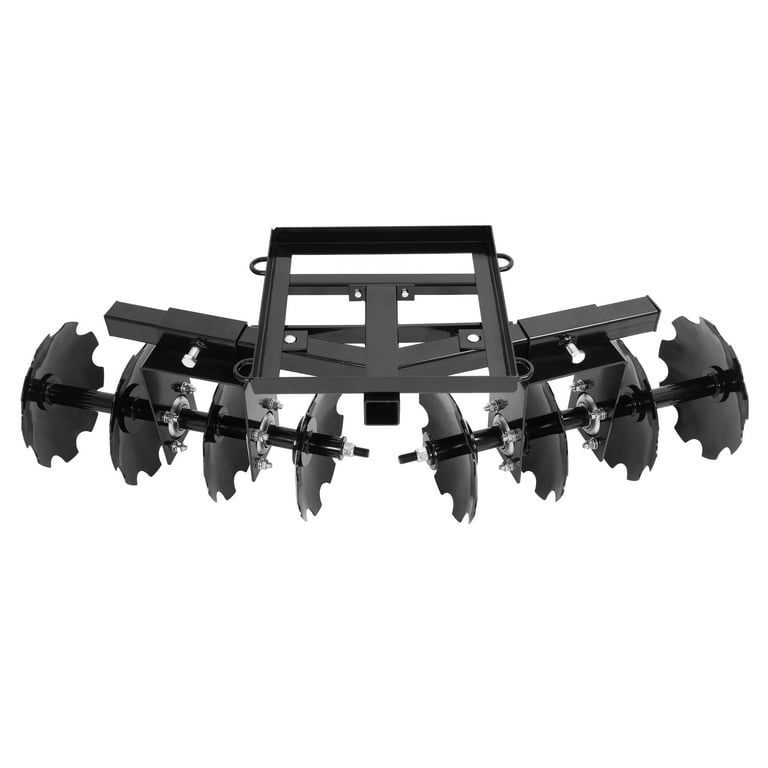
Gang bearings represent the most common and costly point of mechanical failure. When a bearing seizes, it destroys the housing. It often damages the gang axle itself. Repairing this assembly requires extensive labor and expensive replacement parts. Understanding this vulnerability point changes how you maintain the machine.
A proper Disc Harrow Protective Cover Plate acts as the first line of defense. It shields the internal bearing seals from highly abrasive soil. It prevents wireweed and crop residue from wrapping tightly around the axle. When residue wraps too tightly, it pushes past the bearing seal. Moisture and dirt quickly follow, mixing with the grease to form a destructive grinding paste.
When evaluating these protective plates, you must consider three primary dimensions:
Material Thickness and Rigidity: You must choose between heavy gauge steel and cast iron construction. Cast iron resists severe impact from rocks and debris. Heavy gauge steel offers a lighter profile but may bend under extreme pressure. Select the material based on your field's rock density.
Seal Clearance: The plate must adequately shroud the bearing housing. However, it cannot create destructive friction. If the plate rubs directly against the housing during rotation, it generates immense heat. This heat quickly degrades the internal bearing grease. Ensure a precise, minimal gap exists between the plate and the housing.
Replacement Frequency: Assess the manufacturer's design intent. Some cover plates act as sacrificial wear parts. They slowly grind away and require annual replacement. Others function as permanent housing shields. Sacrificial plates often cost less upfront but require more frequent maintenance intervals.
Farmers constantly debate the merits of Original Equipment Manufacturer (OEM) parts versus aftermarket alternatives. The OEM premium sometimes justifies its higher price point. When you deal with complex bearing assemblies, exact dimensional matches matter. OEM parts use the manufacturer's proprietary alloy blends. These blends guarantee compatibility with the implement's intended stress loads. If a failure occurs under warranty, using OEM parts streamlines the claim process.
The aftermarket reality offers significant cost savings if you know how to shop. The market contains both high-quality fabricators and substandard producers. You can identify reputable aftermarket manufacturers through a few key practices. Always request material data sheets before buying in bulk. These sheets verify the steel grade and hardness ratings. Furthermore, check for verifiable warranty terms. A confident aftermarket supplier will guarantee their parts against structural defects, just like the OEM.
We must maintain balanced claims regarding component lifespan. No part is indestructible in a high-abrasion environment. Soil friction acts like sandpaper. Impact stress inevitably causes fatigue. The goal is not finding an immortal blade. The goal is achieving predictable, uniform wear. Predictable wear allows you to schedule maintenance during the off-season. Sudden structural failure causes mid-season downtime.
Standardizing parts across a mixed fleet reduces on-farm inventory complexity. Many operations run harrows from different manufacturers. Instead of stocking five different blade concavities and three different axle sizes, attempt to standardize. Sourcing aftermarket components allows you to retrofit uniform blade sizes across different frames. This strategy reduces the capital tied up in spare parts. It simplifies the repair process for your farm mechanics.
Skipping pre-purchase measurement verification guarantees installation headaches. You cannot simply eyeball a replacement part. The critical steps begin with measuring the arbor bolt diameter. You must know if your axle is square or round. A 1-1/8 inch square axle requires a perfectly matched square center hole on the blade. If you force a mismatched blade onto the axle, the resulting slack will destroy the entire gang assembly within hours.
Calculating accurate blade concavity and diameter ensures the harrow throws soil correctly. To measure concavity, lay a straight edge across the back of the blade. Measure the drop depth from the straight edge to the center hole. You must match this exact concavity to your existing gang setups. If you mix deep concavity blades with shallow ones, the harrow will pull unevenly. It will create ridges in the field instead of a smooth seedbed.
Inspection prerequisites save you from wasting money on new blades. You must inspect the gang axle for bowing before ordering parts. Roll the bare axle across a flat shop floor. If it wobbles, it is bent. Putting new blades and bearings on a bent axle guarantees immediate bearing failure. Additionally, check the axle threads for stretching or damage. Damaged threads prevent the arbor nut from holding tension.
Installation realities dictate the ultimate lifespan of your new components. You must account for strict torque specifications. Hand-tightening an arbor nut is never sufficient. Follow these best practices for installation:
Clean all mating surfaces to remove dirt and old paint before assembly.
Apply anti-seize compound to the axle threads to ensure future removal.
Use a high-capacity torque wrench or hydraulic multiplier to reach the required foot-pounds of torque.
Implement proper tightening sequences. Tighten the assembly, strike the blades lightly with a mallet to seat them, and retorque the nut.
Check the torque again after the first four hours of field operation, as parts will settle.
Durable procurement requires looking far past the initial price tag. By evaluating metallurgy, you ensure the steel matches your specific soil conditions. Verifying dimensional precision prevents destructive vibration and fitment issues. Prioritizing protective shielding keeps your expensive bearing assemblies safe from premature failure. A proactive approach transforms harrow maintenance from a mid-season emergency into a predictable, manageable expense.
Take immediate action to improve your equipment's reliability. Audit your current harrow wear patterns to identify which components fail most frequently. Document exact specifications for your machines, including axle size, blade spacing, and required concavity. Finally, shortlist suppliers that provide transparent material data and stand behind their products with verifiable warranties.
A: Focus on pre-season audits and mid-season visual checks. Specifically, look for deep grooving or distortion on the plate. If the plate bends or wears thin enough to expose the bearing seal, replace it immediately. Catching this early prevents total bearing failure.
A: It depends on your soil. Boron steel's flexibility prevents cracking in rocky soils, making it superior for harsh conditions. However, in sandy, rock-free soils, high-carbon steel offers excellent rigidity and acceptable wear rates at a significantly lower purchase cost.
A: Lay a rigid straightedge flat across the back (convex side) of the disc. Measure the diameter from edge to edge. To determine concavity, measure the drop depth from the bottom of the straightedge down to the flat center hole.
A: You can, but it carries risks. Uneven wear rates occur if the metallurgy differs. More importantly, mixing components causes balancing issues if the blade weights or concavities differ. It is generally safer to replace entire gangs with uniform parts.


